
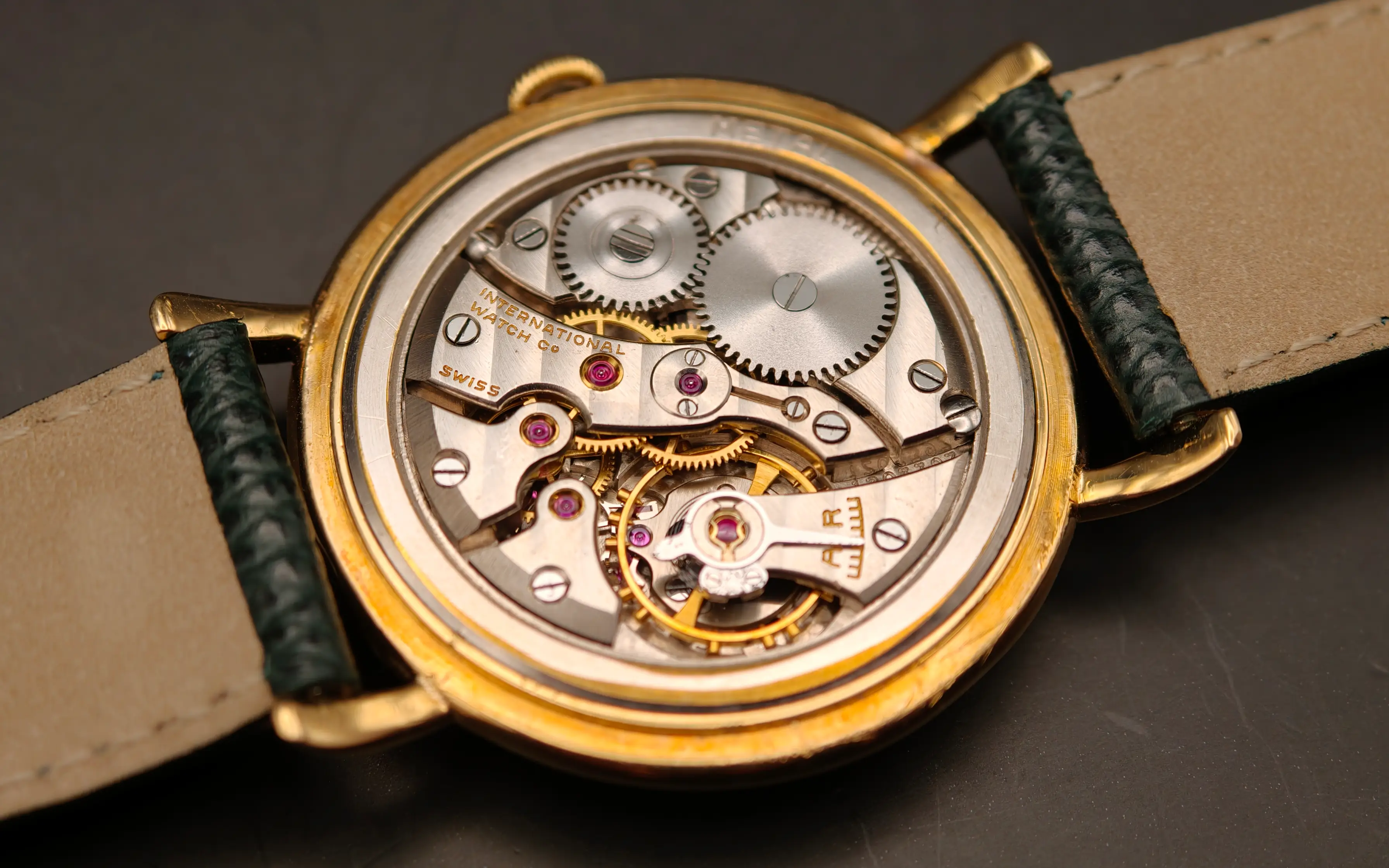
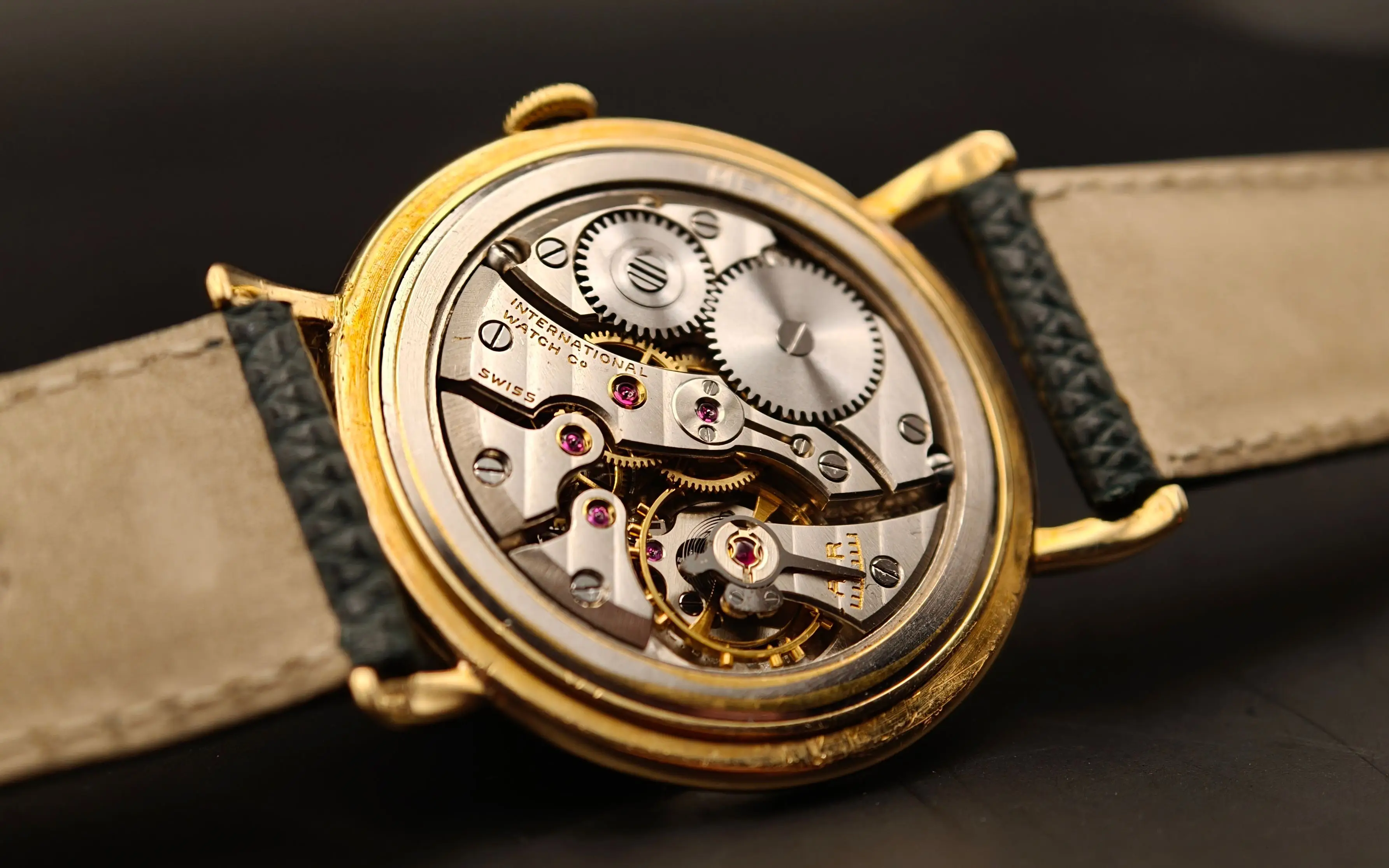
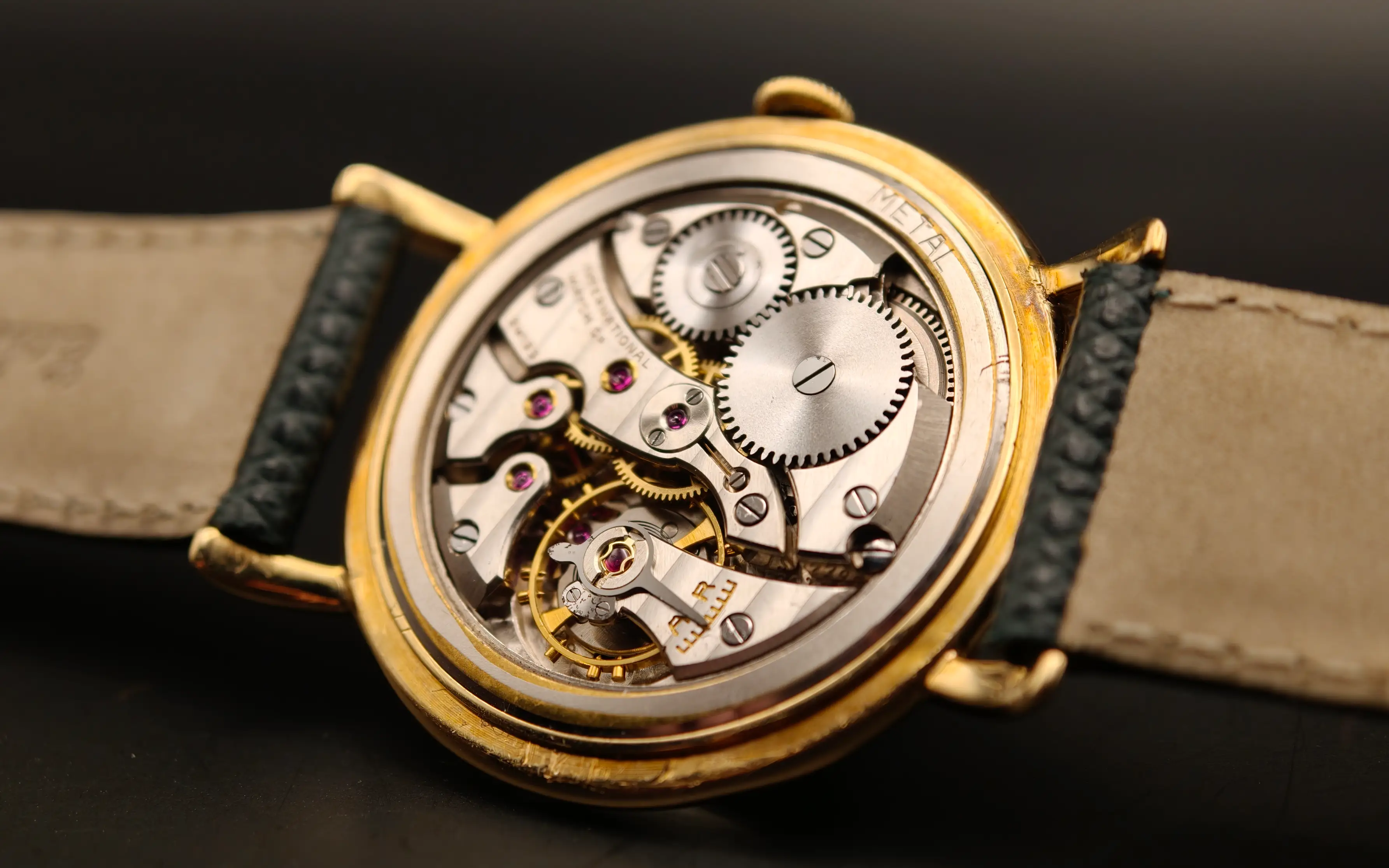
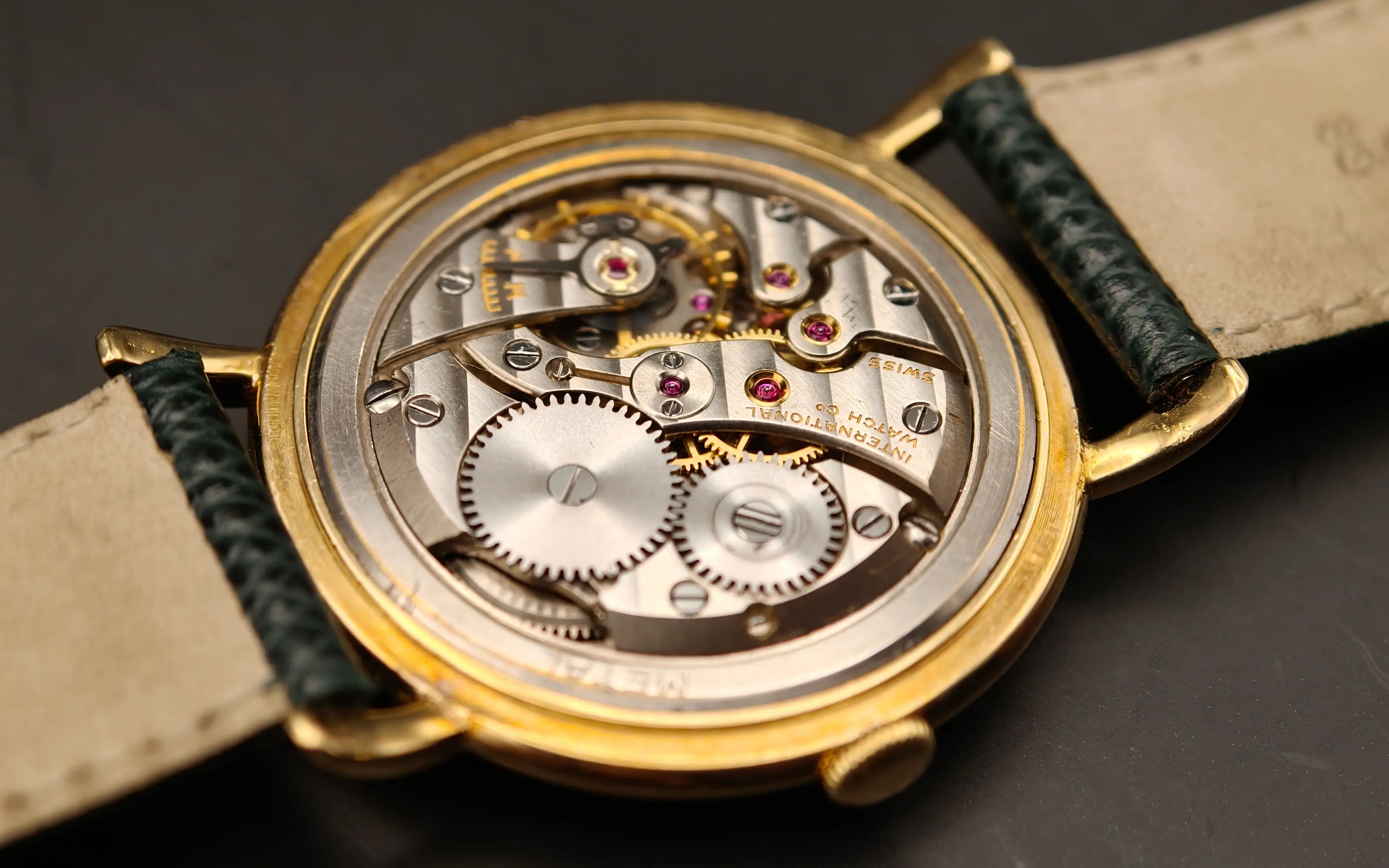
IWC 18K gold, 1950s
Barely five minutes had passed since he stepped through the door of his home when the bell rang. At the threshold stood the ever-smiling postman, holding a square parcel wrapped in beige tissue paper. Without even glancing at the address, he knew who the sender was.
Jean-Pierre had been his inseparable friend ever since their days at the École d’horlogerie de Genève. It wasn’t only their shared reverence for the art of watch design and craftsmanship that bound them together; they could talk for hours about literature, music, and philosophy. Time and again, his friend had proven himself to be a perceptive admirer of contemporary literature too, with impeccable taste.
Holding the package, he stepped into the living room, his eyes drifting toward the bookshelf. That blue-bound volume—one of the first editions of *The Old Man and the Sea*—had also been a gift from Jean-Pierre, back in 1952, when he had successfully passed his master’s examination and traveled to Schaffhausen to apply for a position at the International Watch Company. Two years later, in 1954, Hemingway was awarded the Nobel Prize in Literature.
What had Jean-Pierre discovered this time?
As he unwrapped the delicate tissue, a smile spread across his face. A record sleeve emerged, along with a small note in that distinctive, lively handwriting that instantly brought to mind Jean-Pierre’s jaunty mustache.
“At the Schubertiade in Hohenems I heard him play a four-hand piece with one of your favourites — Sviatoslav Richter. Quite brilliant. On this recording from 1970, he was still only eighteen.“
On the cover sat a young man—almost still a boy—at the piano: Zoltán Kocsis.
As the tonearm slowly descended onto the vinyl, Hans Peter sank into the soft armchair, and the opening chords of Beethoven’s Piano Concerto in G major filled the room. Before the music could fully carry him away, he found himself calculating: this brilliant pianist was only twenty-five.
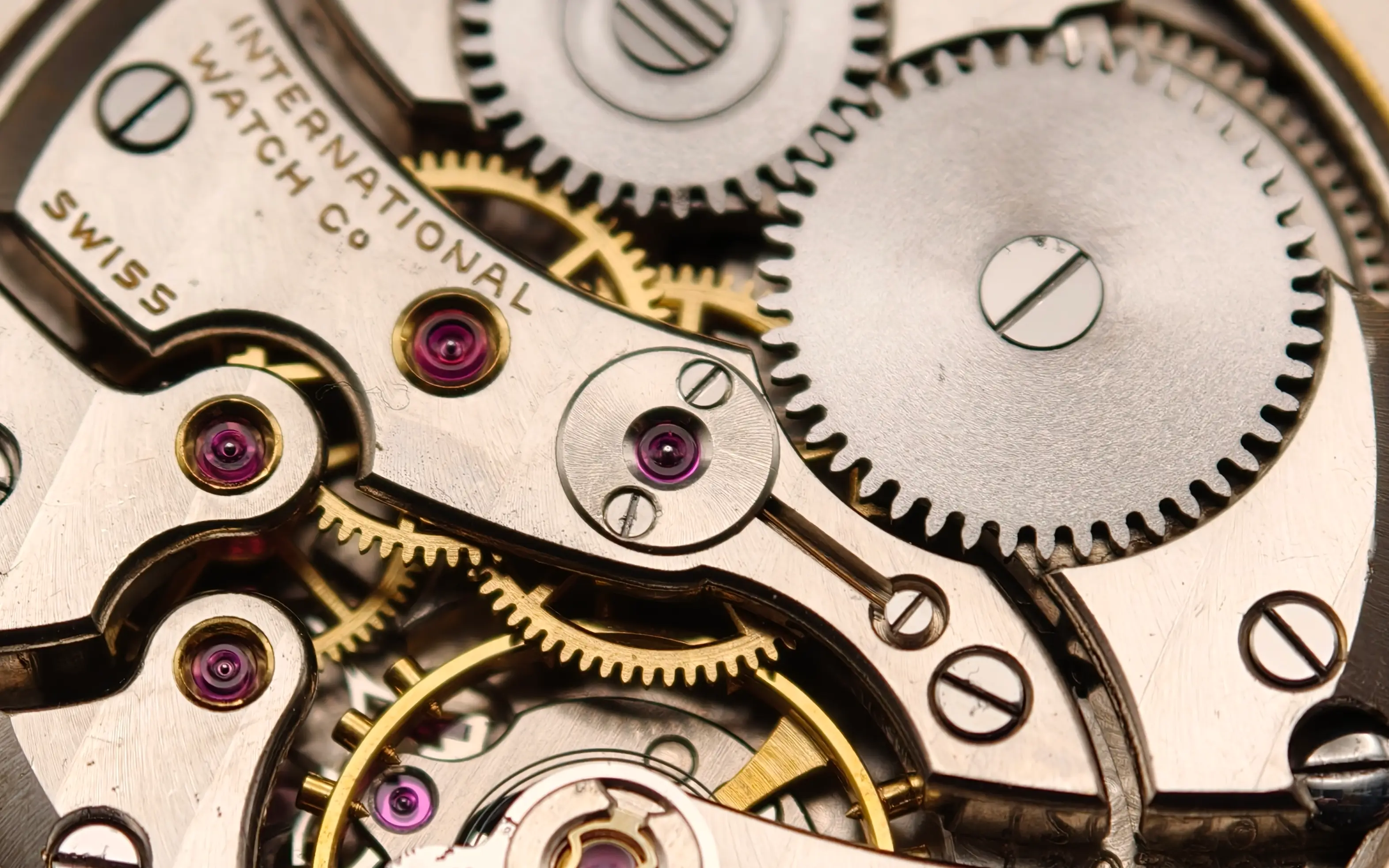
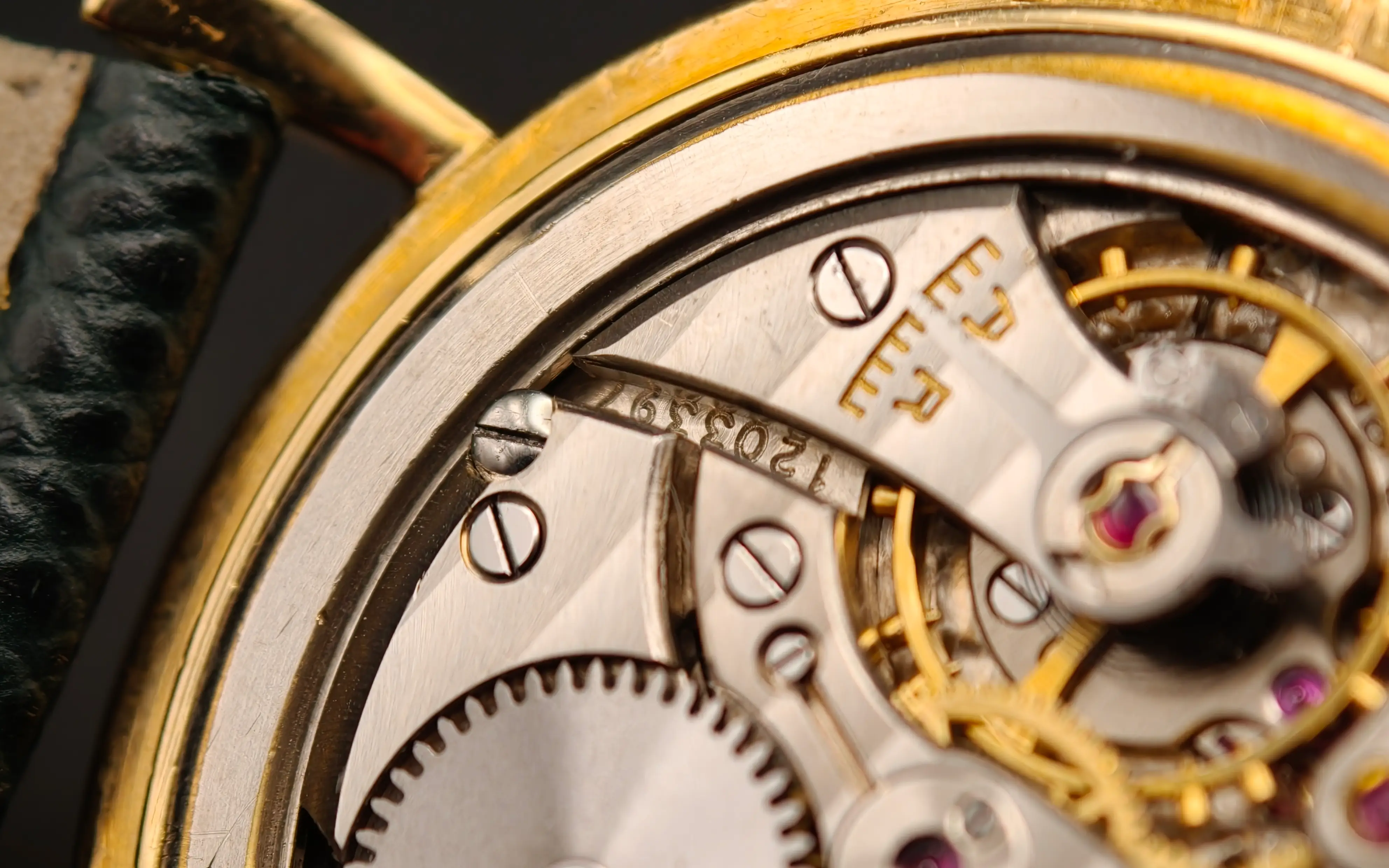
And then it struck him—twenty-five years had passed since he had completed his very first IWC watch, since that Geneva-striped movement had come to life within its elegant teardrop lugs gold case. Twenty-five years since Hemingway had written that remarkable novel, a first edition of which still rested on his shelf.
Every atom of his body resonated with the pianist’s playing. He closed his eyes, as a thought swept through his mind:
Yes—1952 had been a year in which unforgettable and wondrous things were born.
More than a watch. A window into history.
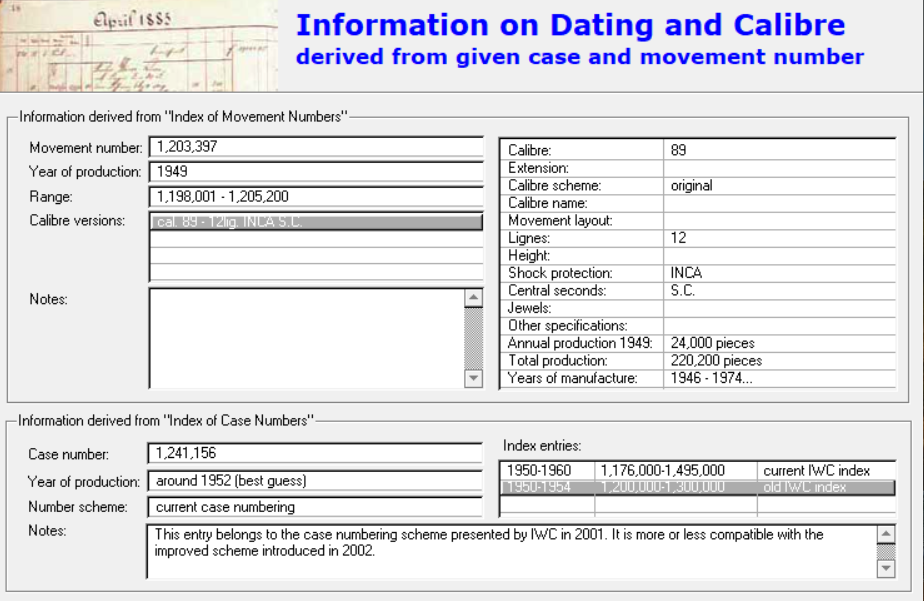
Year of manufacture: 1952
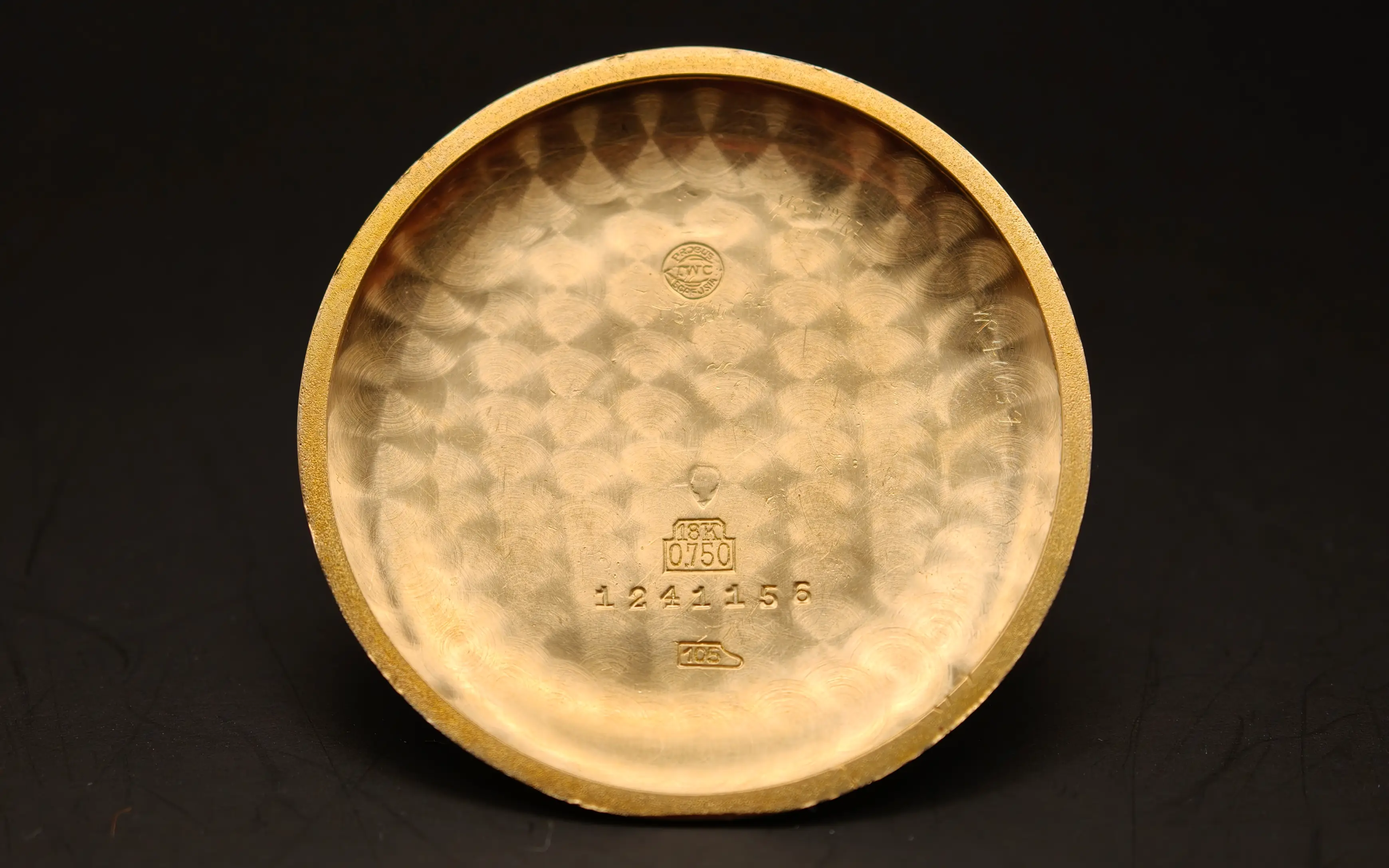
Material: 18-carat gold
Movement: Hand-wound
Caliber: 89 (in-house)
Diameter: 36.5mm (measured without crown)
Estimated price: 3800€
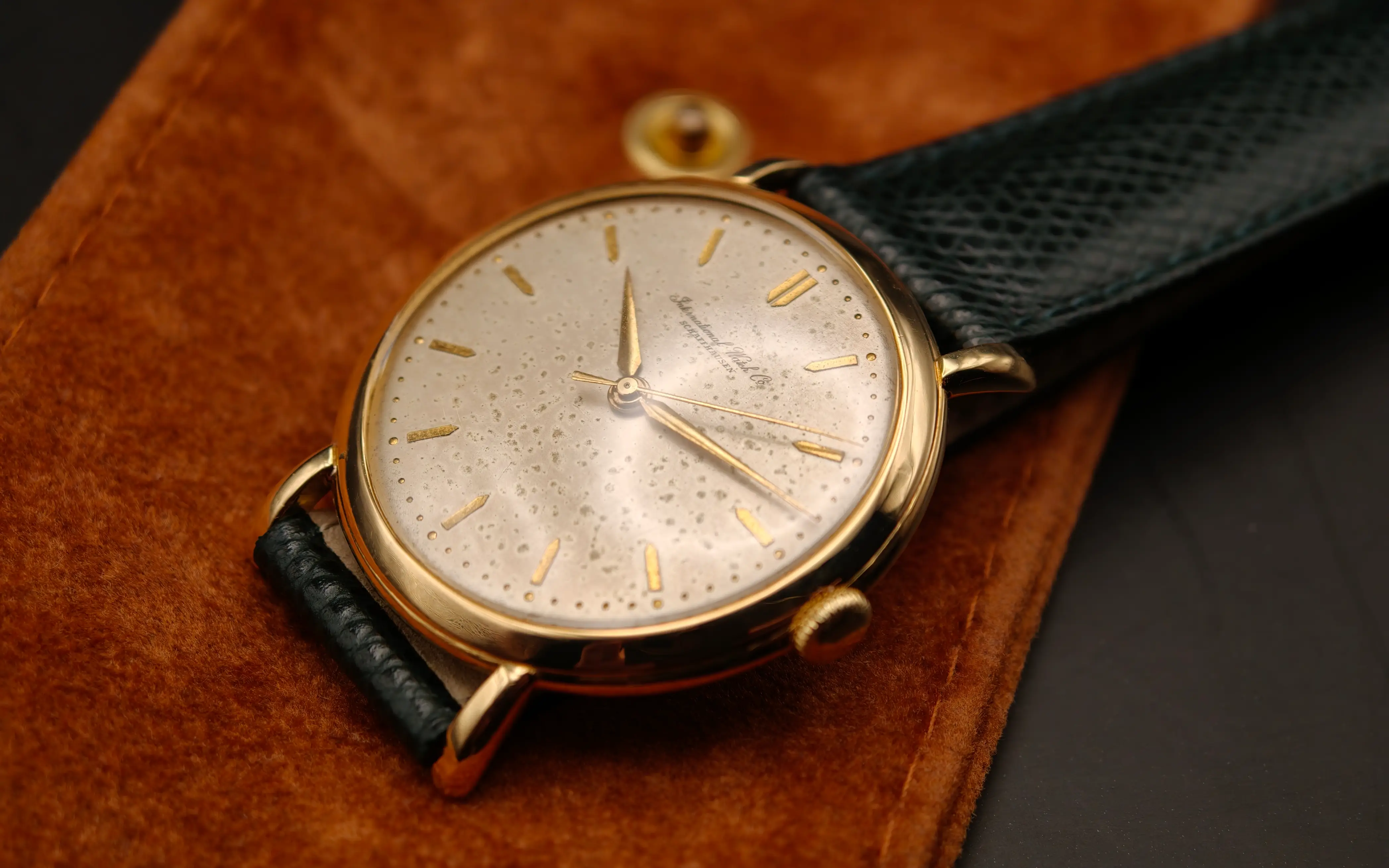
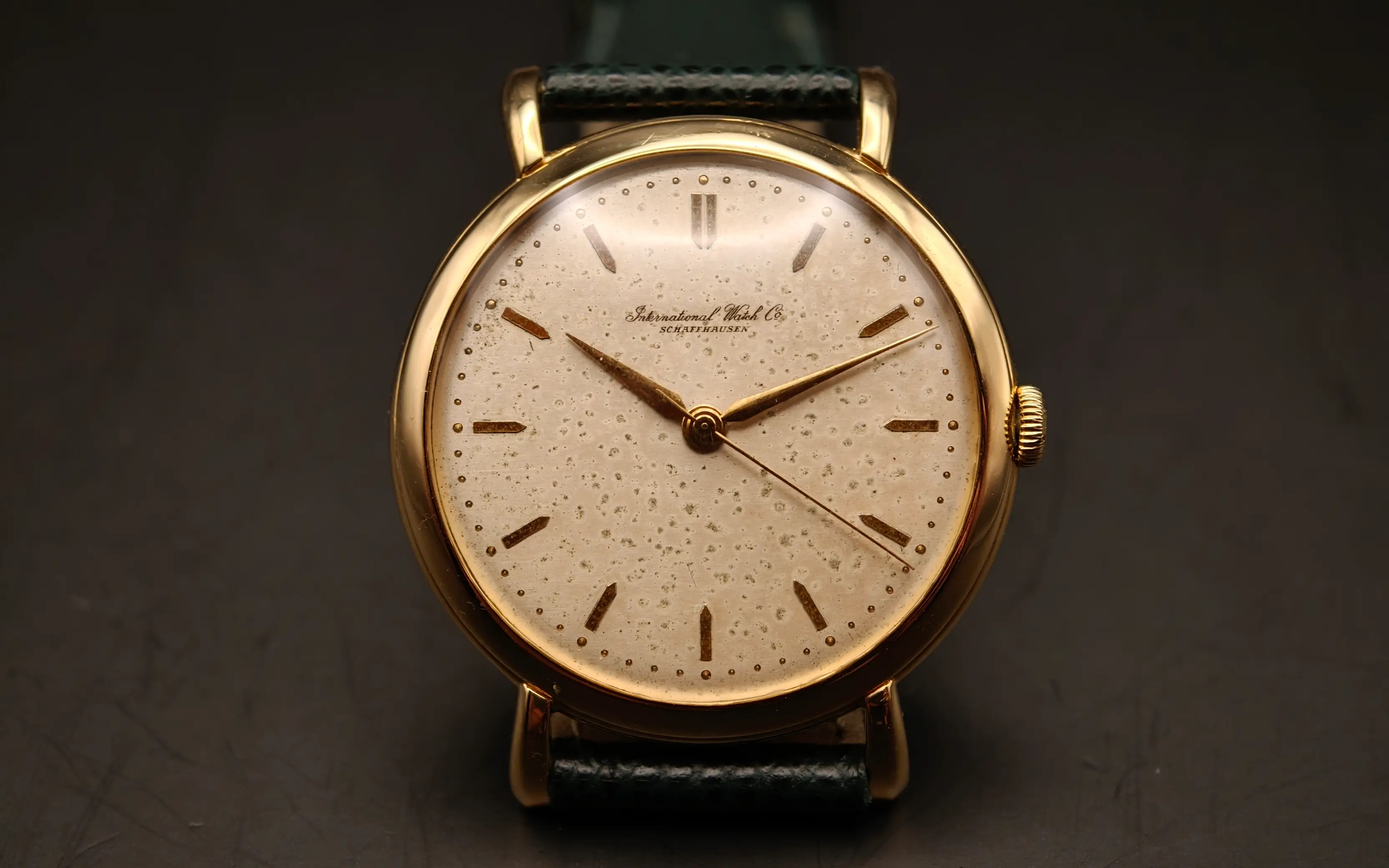
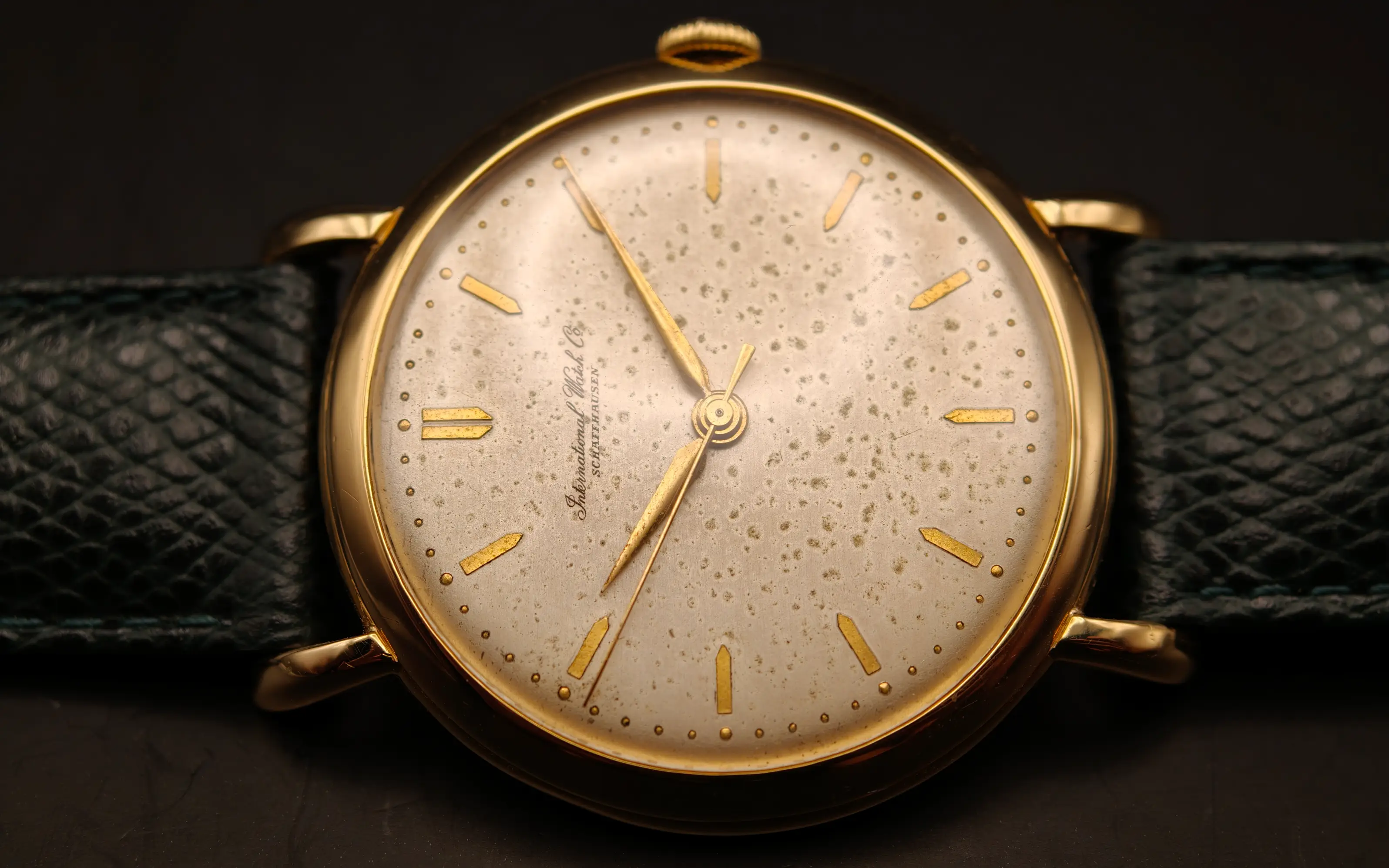
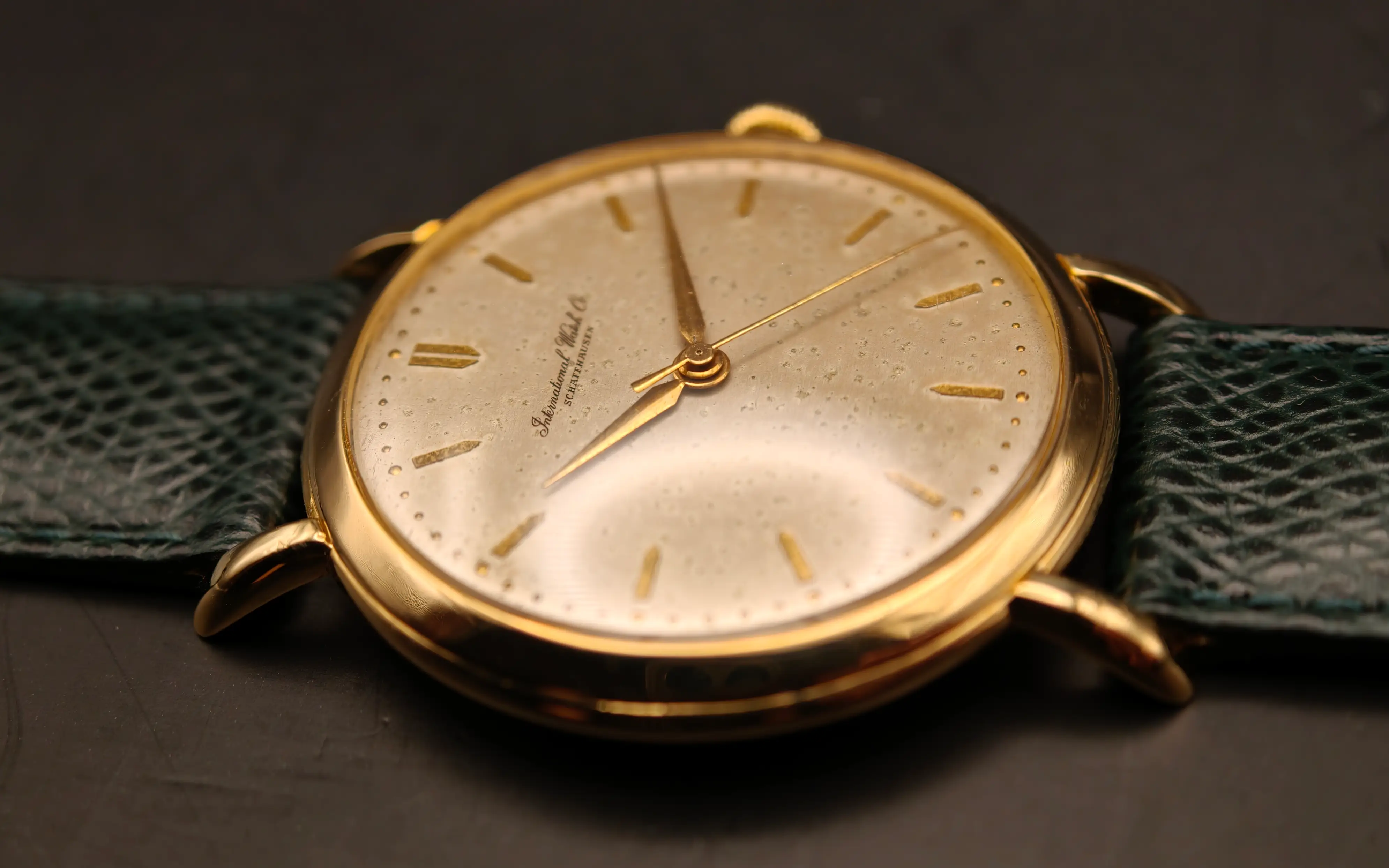
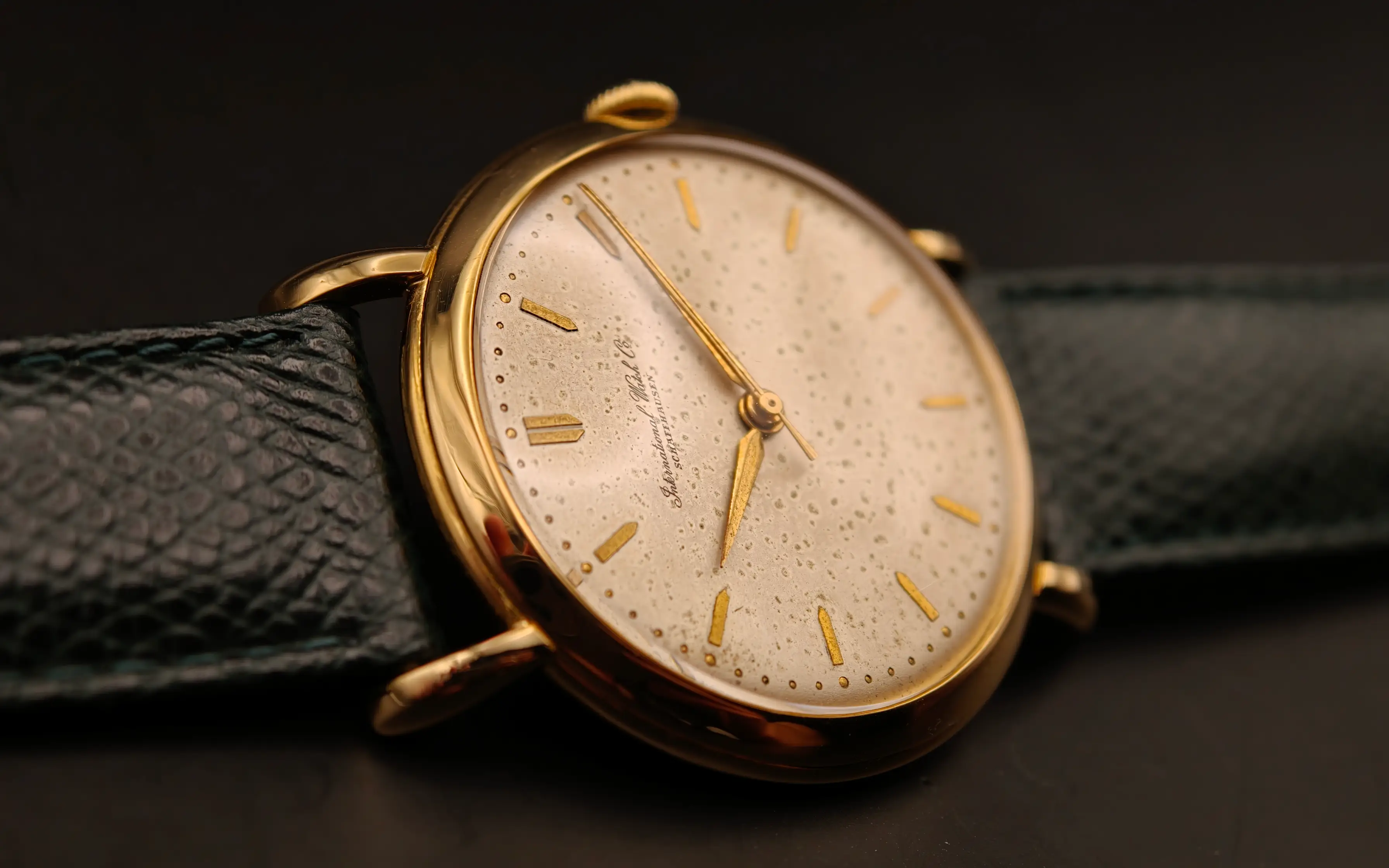
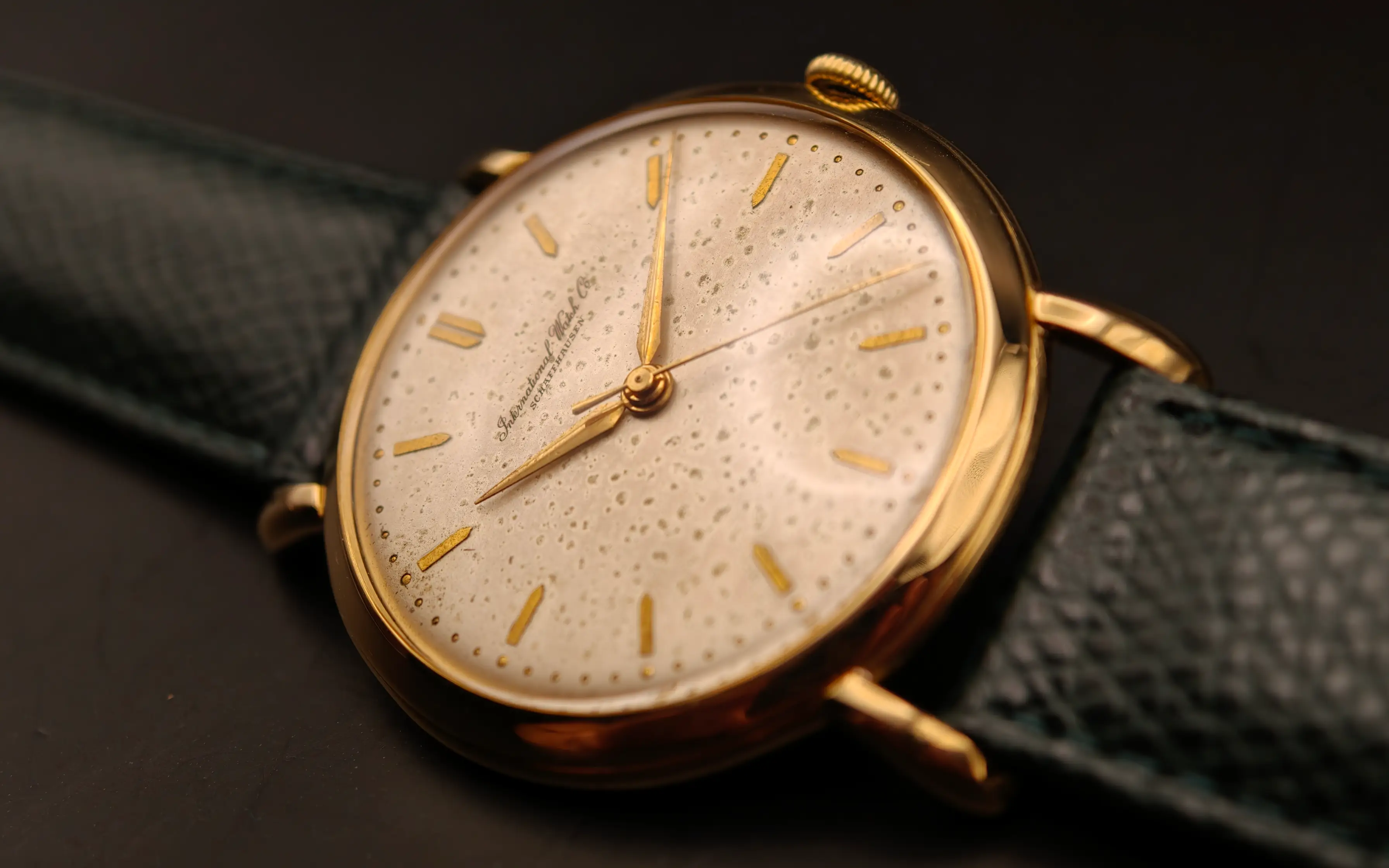
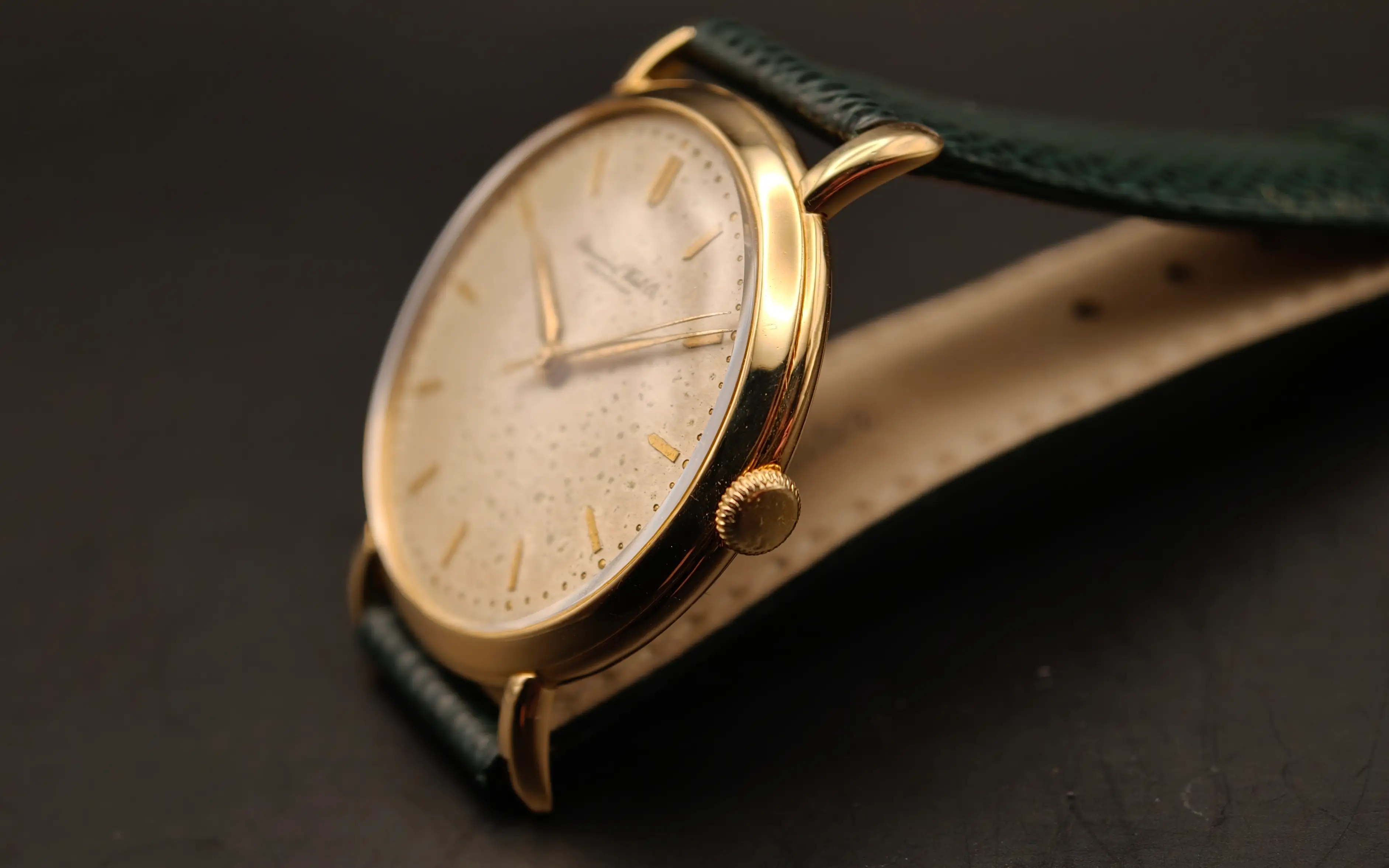
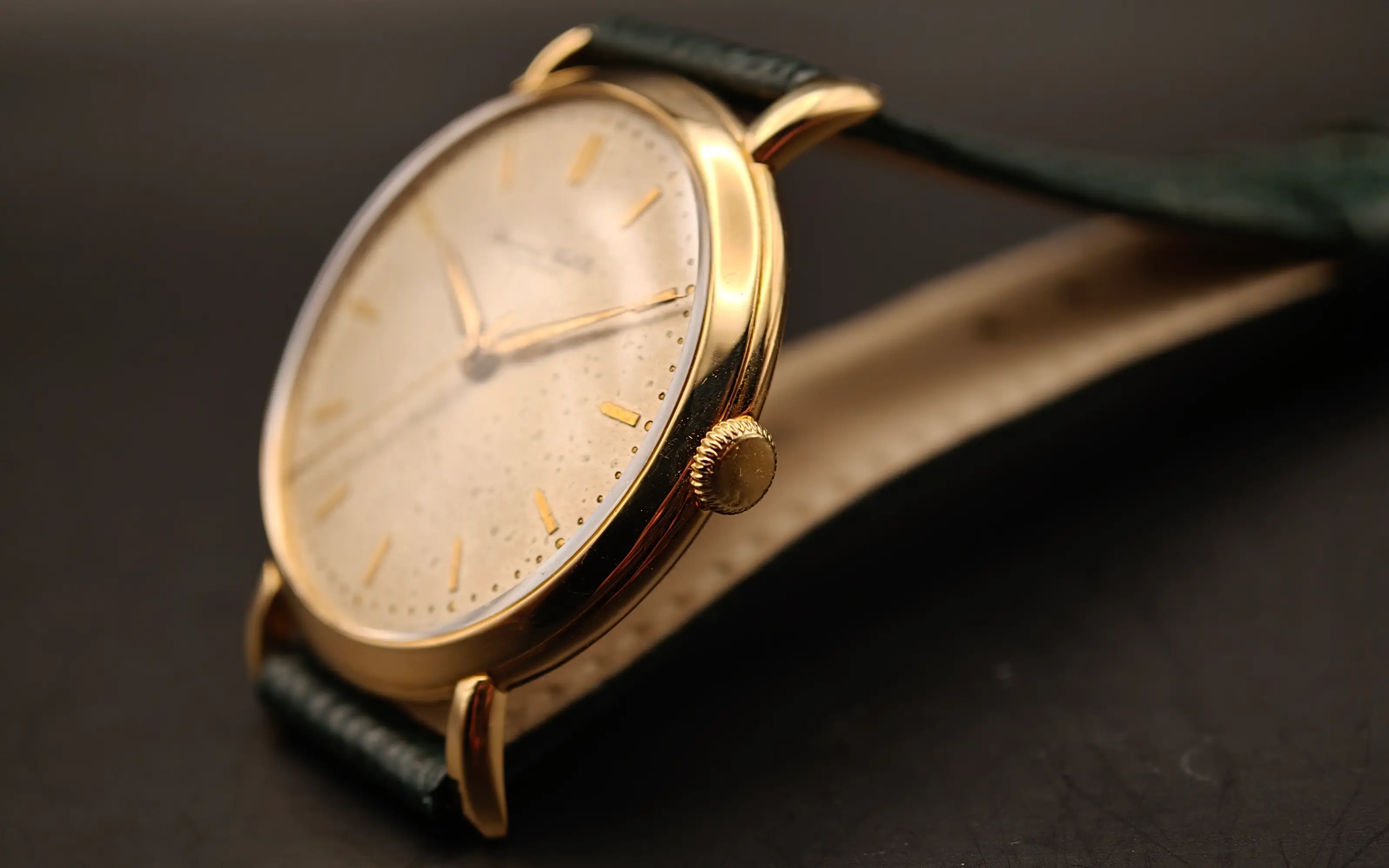
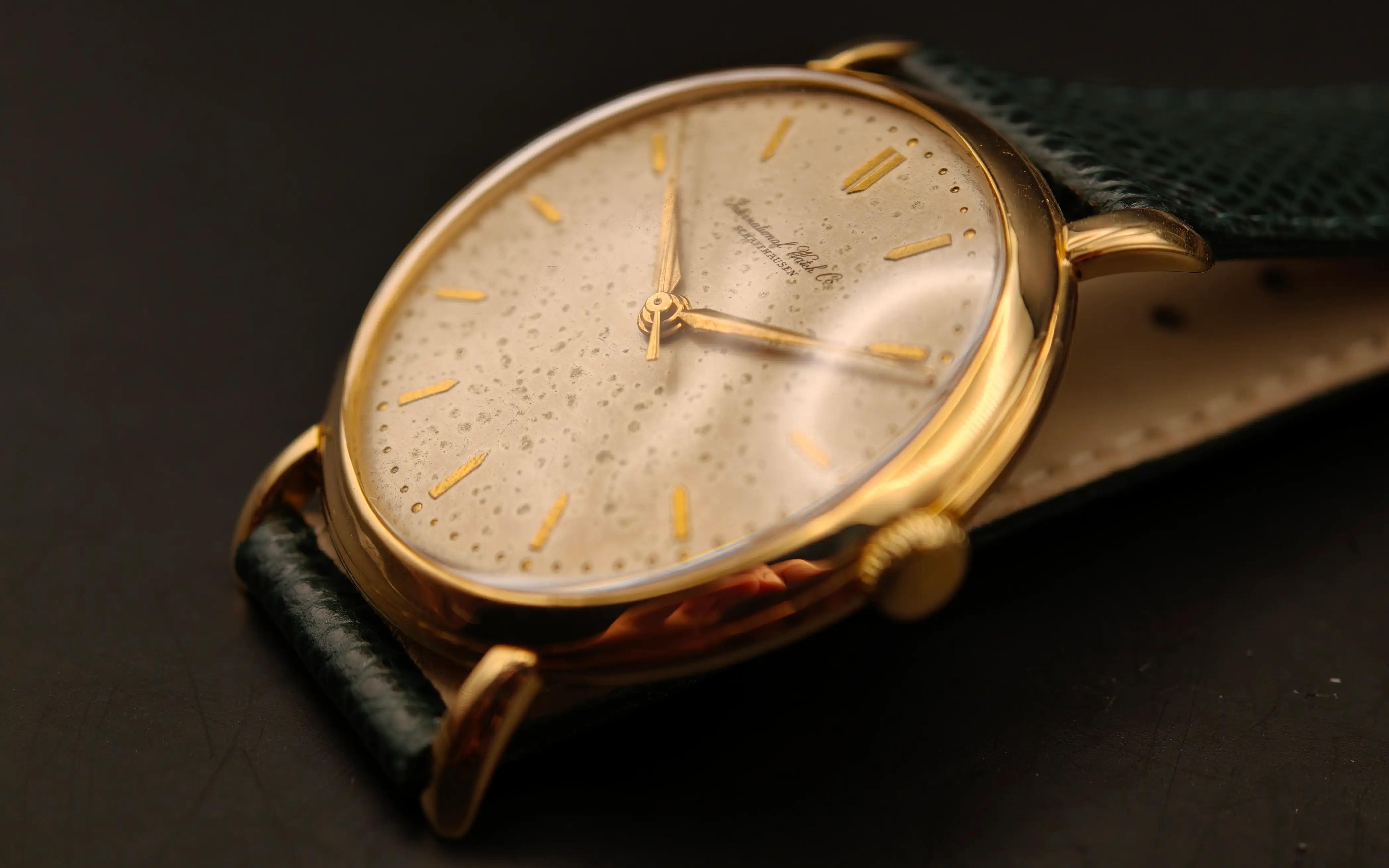
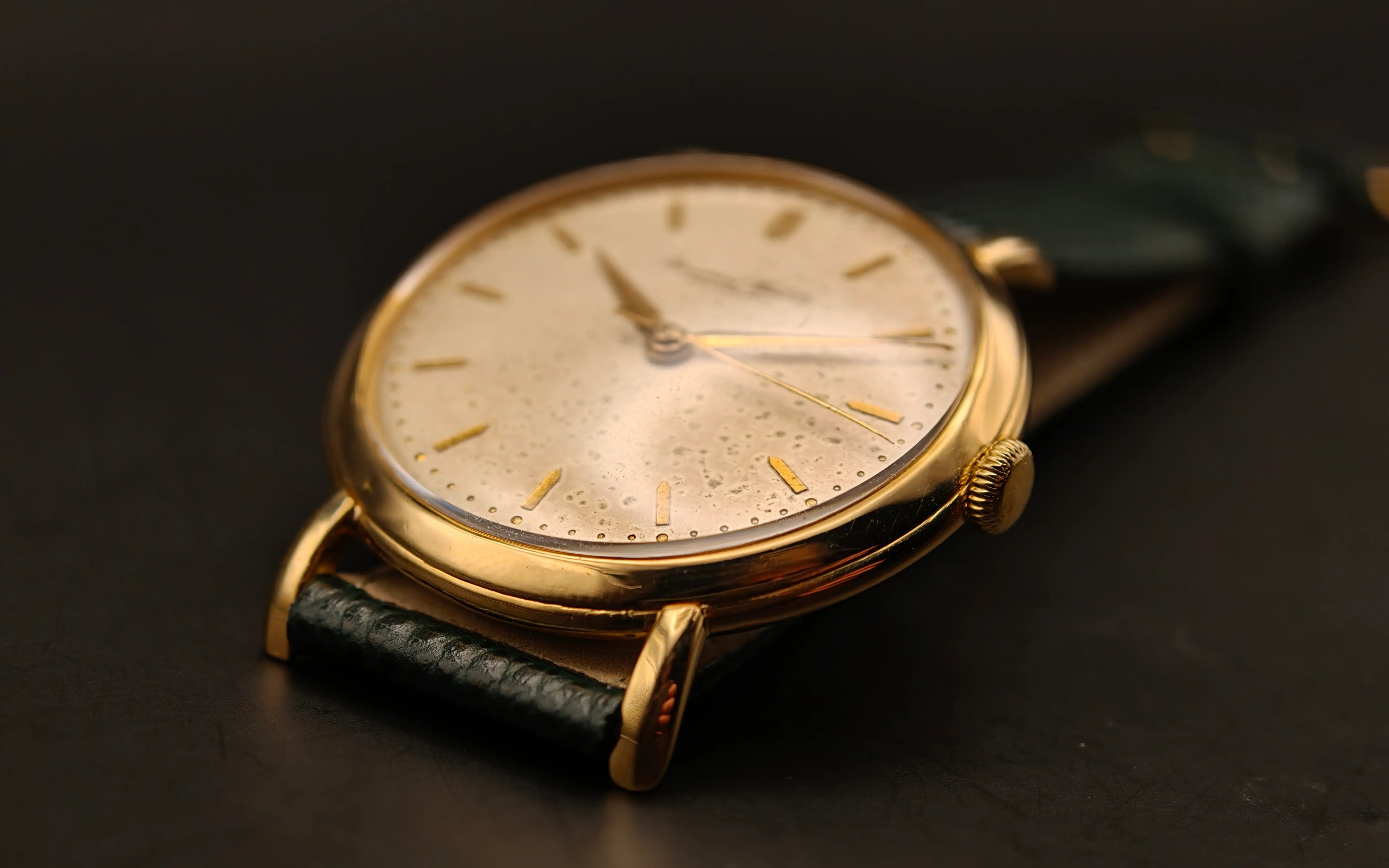
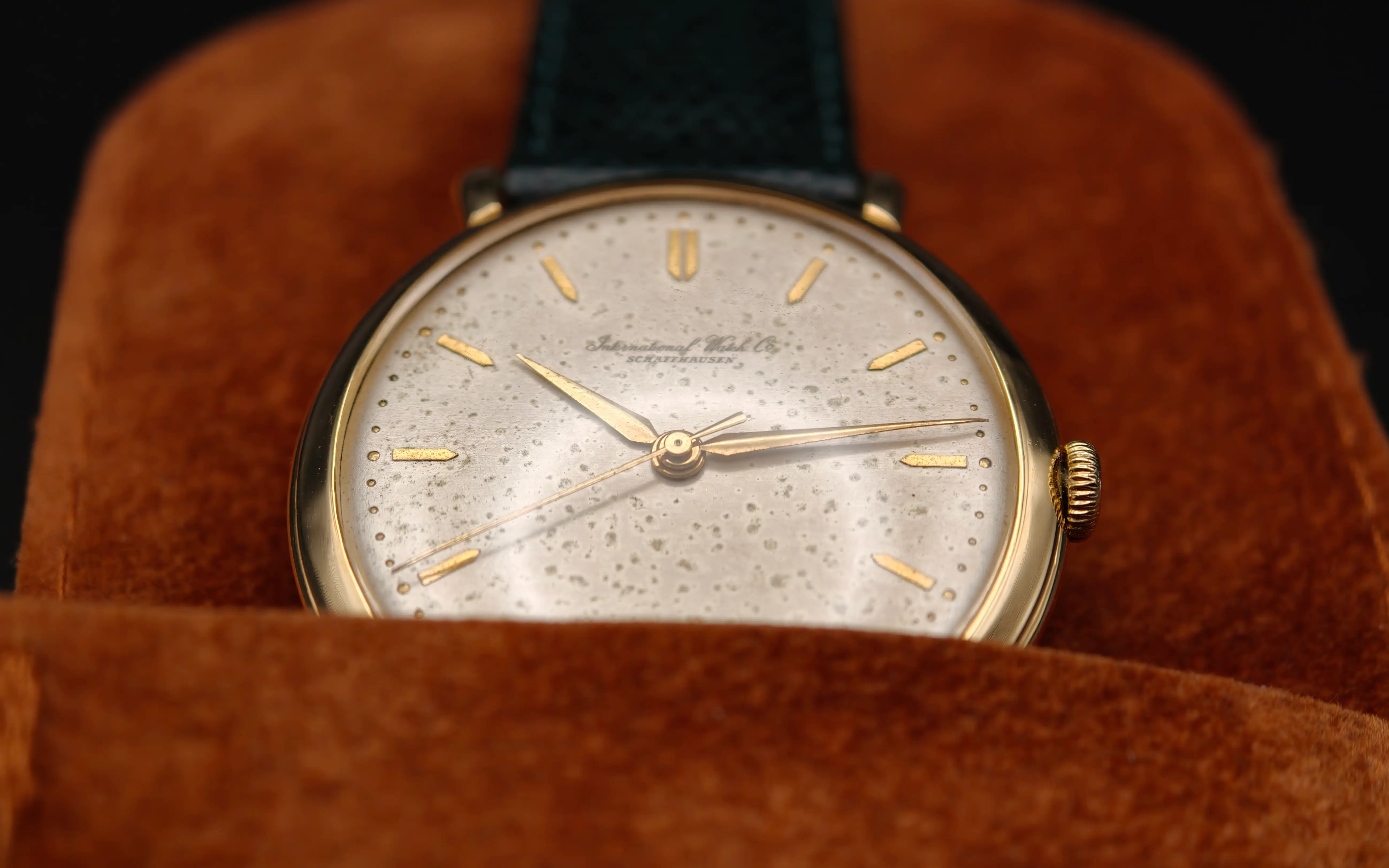
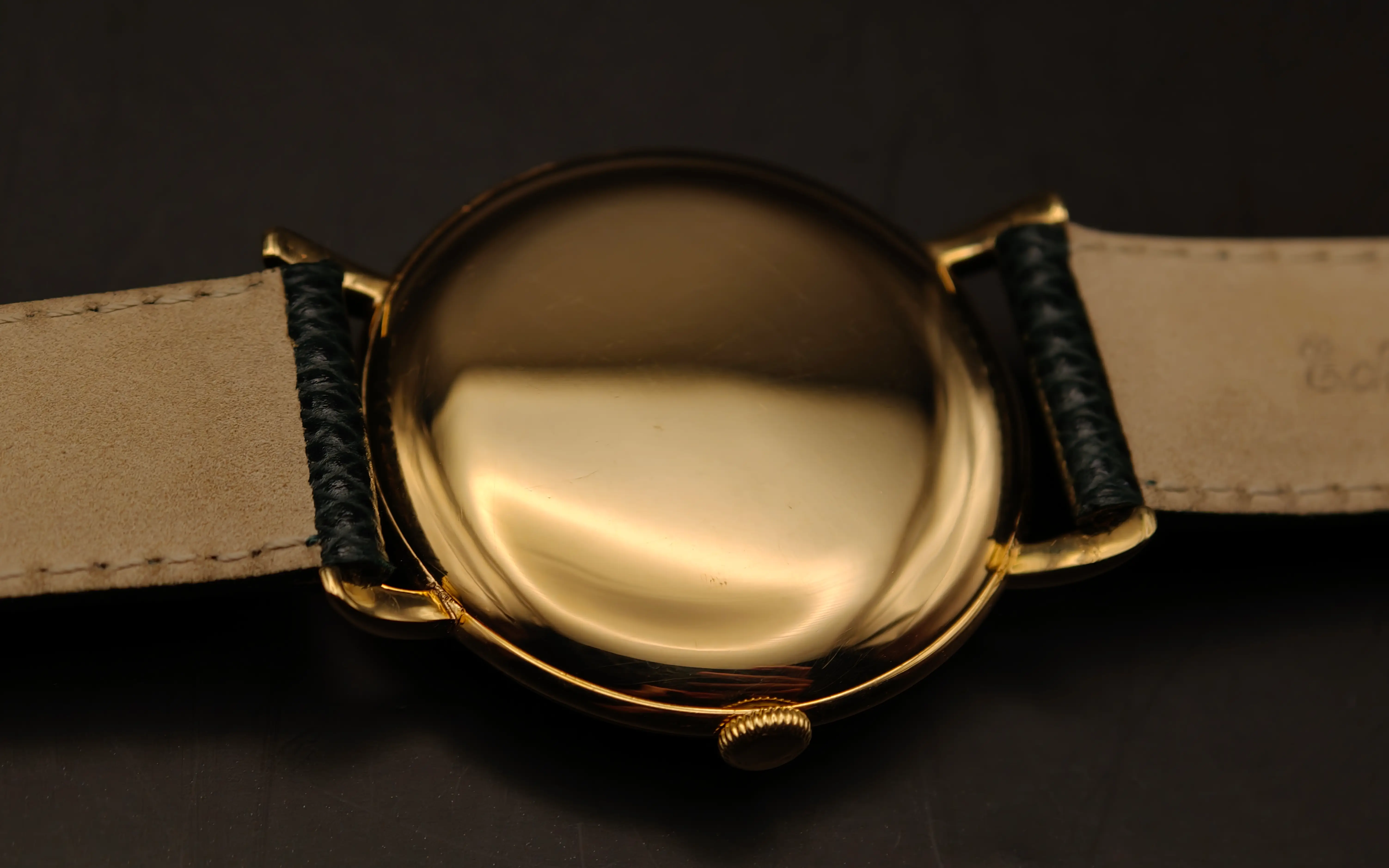
There is something almost intimate about a watch like this. Solid 18-carat gold, 36.5 mm — jumbo for its era, carried with confidence on the wrist through its three-piece case and distinctive teardrop lugs. The kind of thing you notice on someone’s wrist and quietly wonder about.
The dial has aged beautifully and honestly. Cream turned ivory, dusted with the fine freckles that only come with decades of existence. The applied gold indices still catch the light cleanly. Against this backdrop, the slender gold hands move with the calm of something that has kept its own time since 1952.
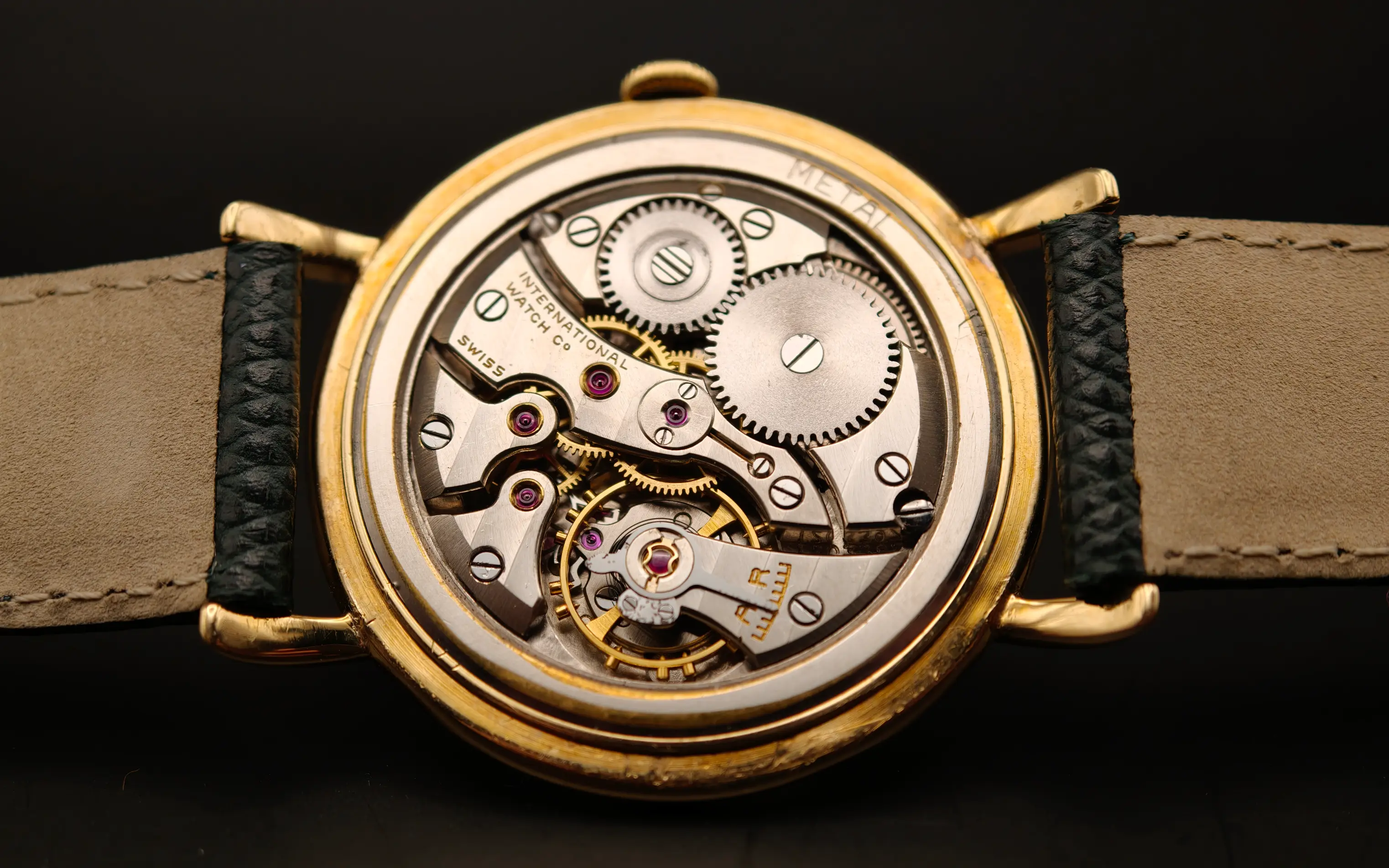
Inside beats the hand-wound caliber 89 — an in-house movement, no date, no complications. Just the pure discipline of Schaffhausen watchmaking at its post-war peak.
Baujahr: 1940
Material: Gold
Uhrwerk: Mechanisch
Caliber: 30t2
Durchmesser: 37mm
IWC 18K gold, 1950s
Barely five minutes had passed since he stepped through the door of his home when the bell rang. At the threshold stood the ever-smiling postman, holding a square parcel wrapped in beige tissue paper. Without even glancing at the address, he knew who the sender was.
Jean-Pierre had been his inseparable friend ever since their days at the École d’horlogerie de Genève. It wasn’t only their shared reverence for the art of watch design and craftsmanship that bound them together; they could talk for hours about literature, music, and philosophy. Time and again, his friend had proven himself to be a perceptive admirer of contemporary literature too, with impeccable taste.
Holding the package, he stepped into the living room, his eyes drifting toward the bookshelf. That blue-bound volume—one of the first editions of *The Old Man and the Sea*—had also been a gift from Jean-Pierre, back in 1952, when he had successfully passed his master’s examination and traveled to Schaffhausen to apply for a position at the International Watch Company. Two years later, in 1954, Hemingway was awarded the Nobel Prize in Literature.
What had Jean-Pierre discovered this time?
As he unwrapped the delicate tissue, a smile spread across his face. A record sleeve emerged, along with a small note in that distinctive, lively handwriting that instantly brought to mind Jean-Pierre’s jaunty mustache.
“At the Schubertiade in Hohenems I heard him play a four-hand piece with one of your favourites — Sviatoslav Richter. Quite brilliant. On this recording from 1970, he was still only eighteen.“
On the cover sat a young man—almost still a boy—at the piano: Zoltán Kocsis.
As the tonearm slowly descended onto the vinyl, Hans Peter sank into the soft armchair, and the opening chords of Beethoven’s Piano Concerto in G major filled the room. Before the music could fully carry him away, he found himself calculating: this brilliant pianist was only twenty-five.
And then it struck him—twenty-five years had passed since he had completed his very first IWC watch, since that Geneva-striped movement had come to life within its elegant teardrop lugs gold case. Twenty-five years since Hemingway had written that remarkable novel, a first edition of which still rested on his shelf.
Every atom of his body resonated with the pianist’s playing. He closed his eyes, as a thought swept through his mind:
Yes—1952 had been a year in which unforgettable and wondrous things were born.
More than a watch. A window into history.
Year of manufacture: 1952
Material: 18-carat gold
Movement: Hand-wound
Caliber: 89 (in-house)
Diameter: 36.5mm
(measured without crown)
Estimated price: 3800€