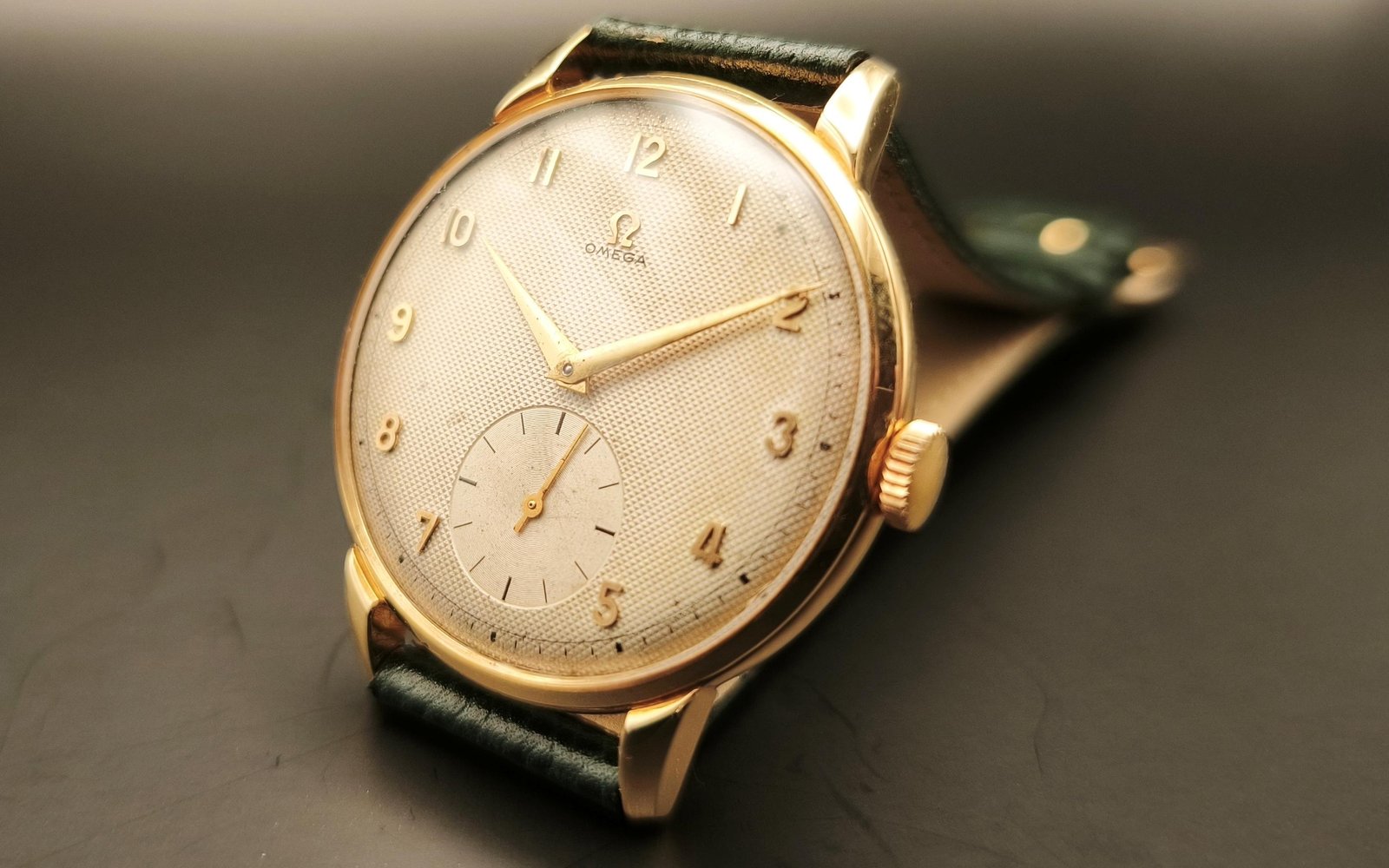
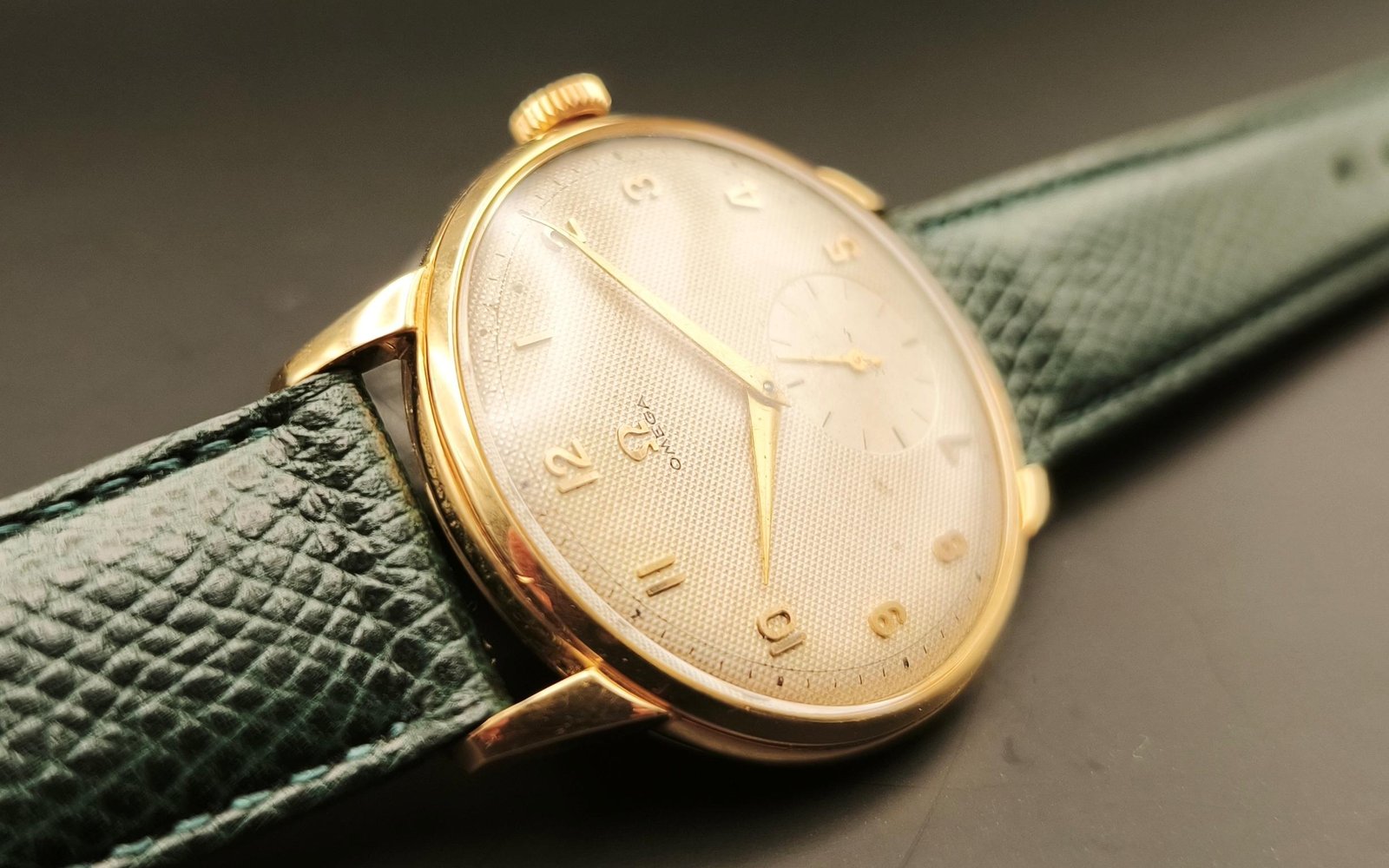
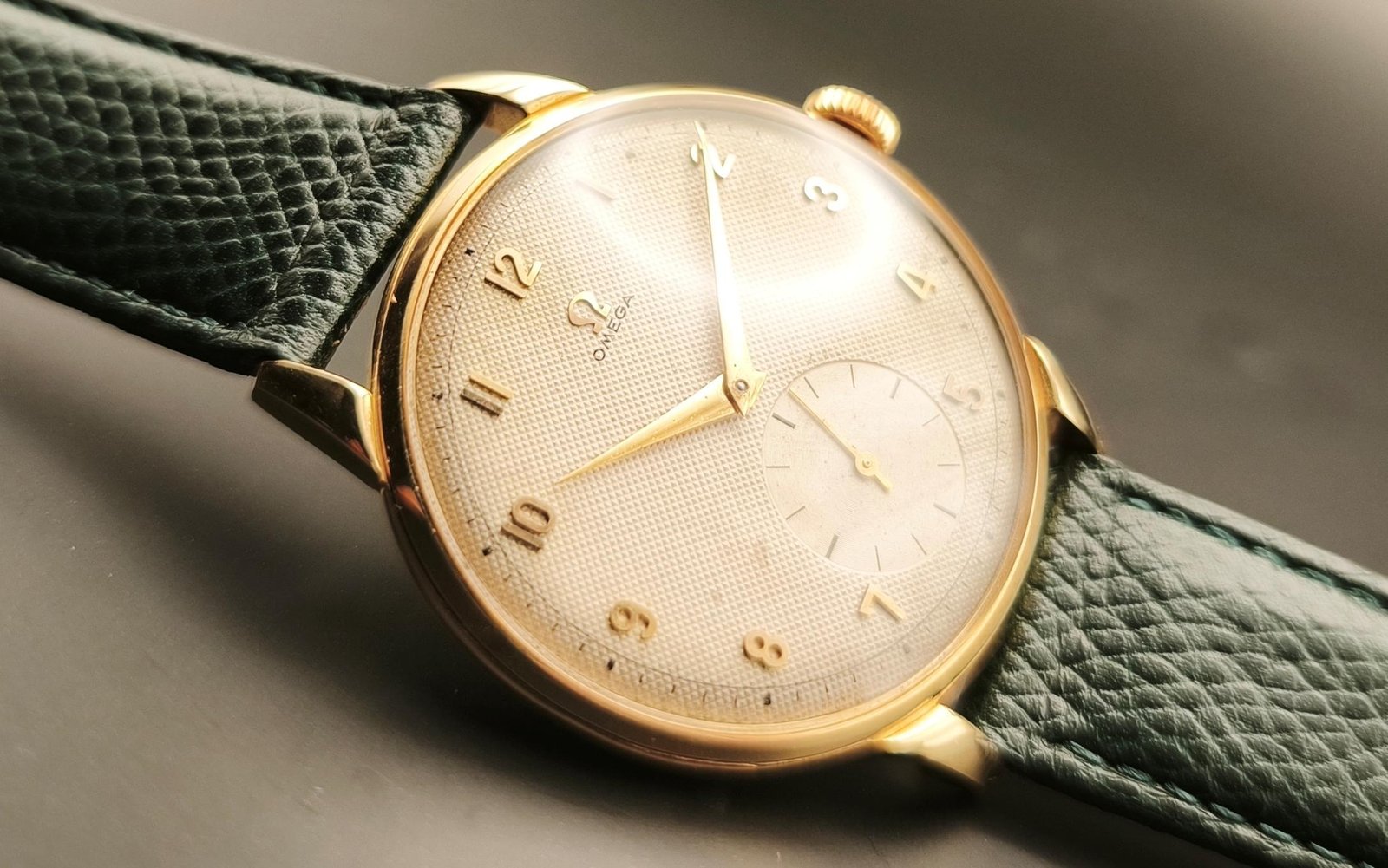
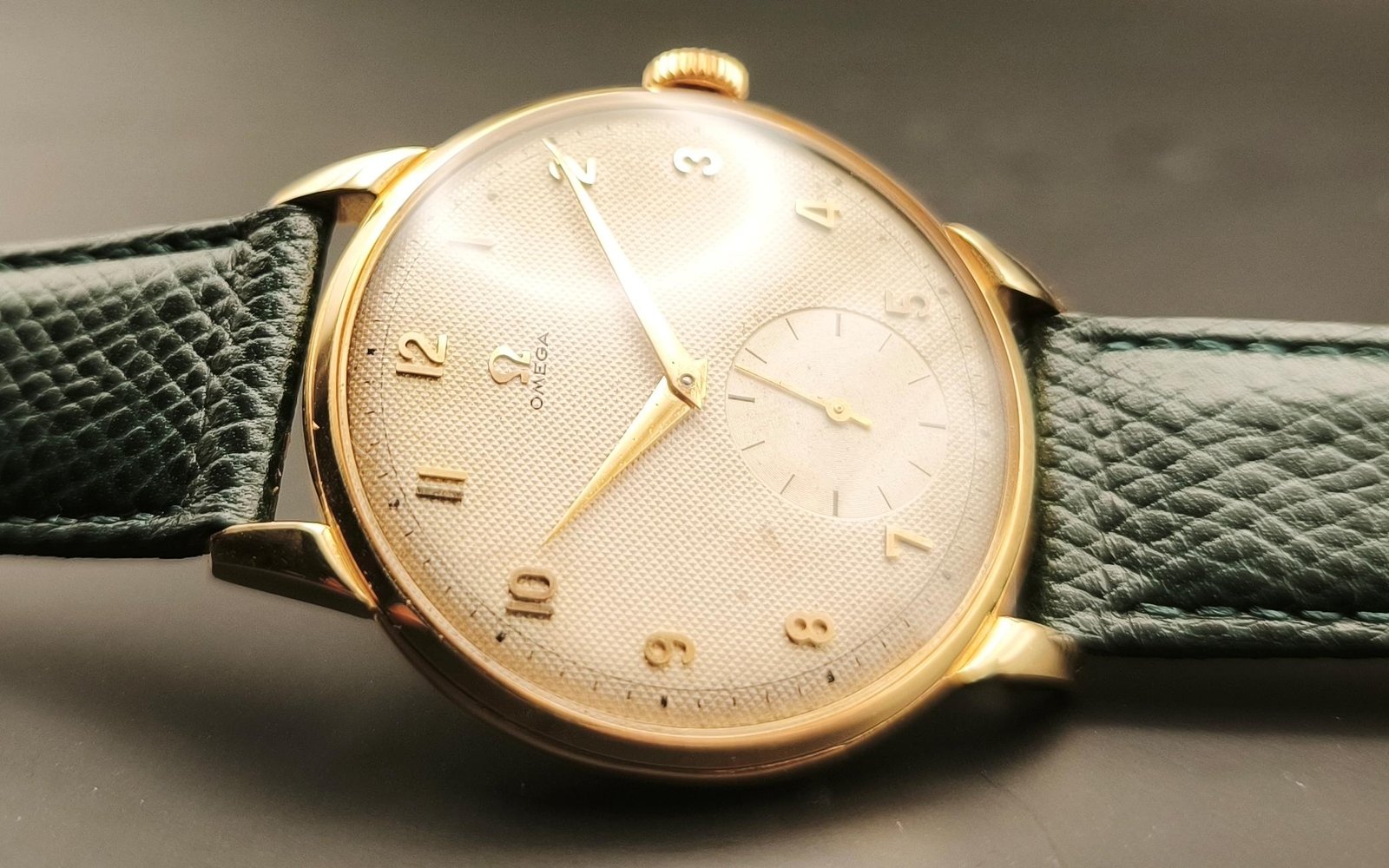
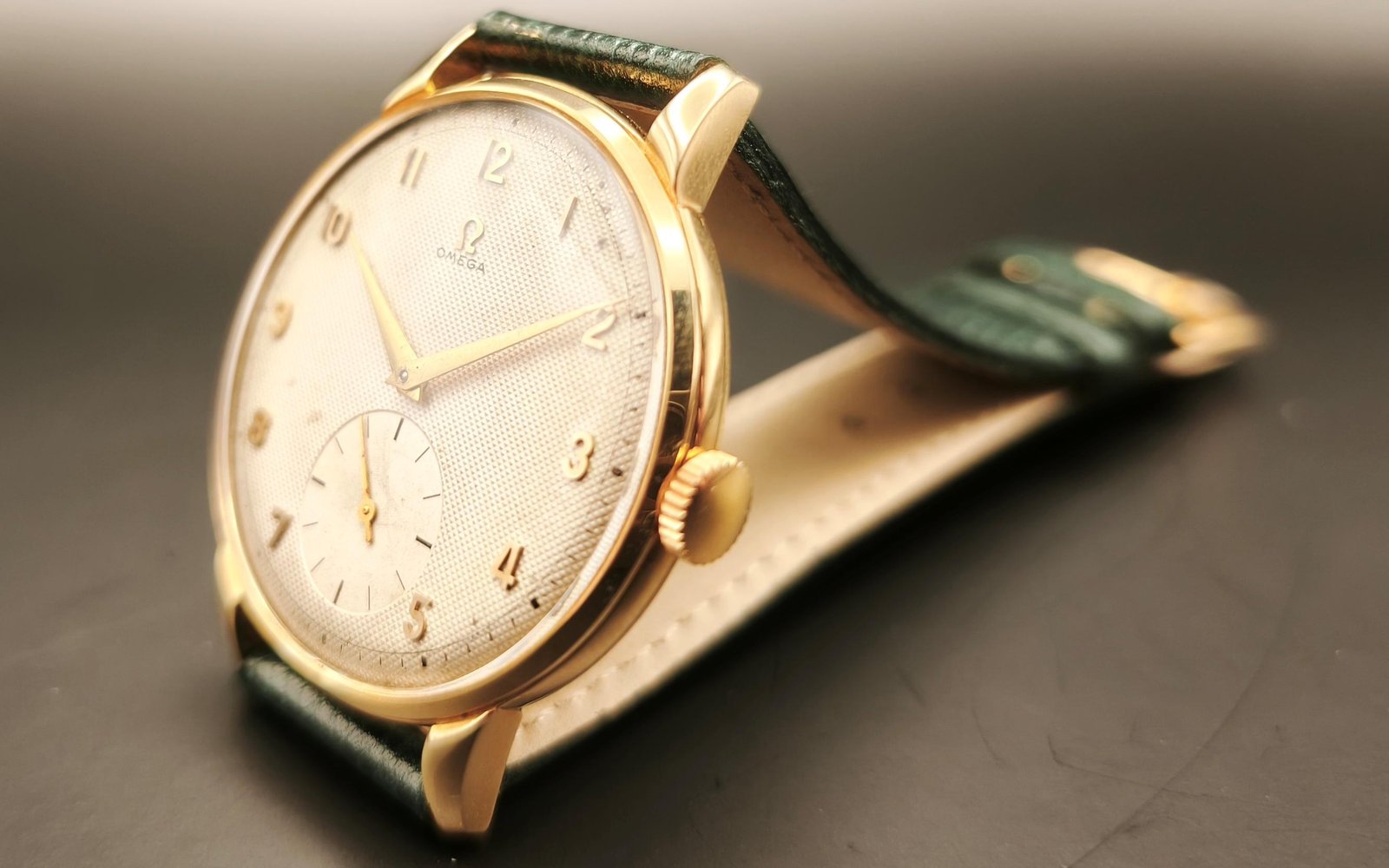
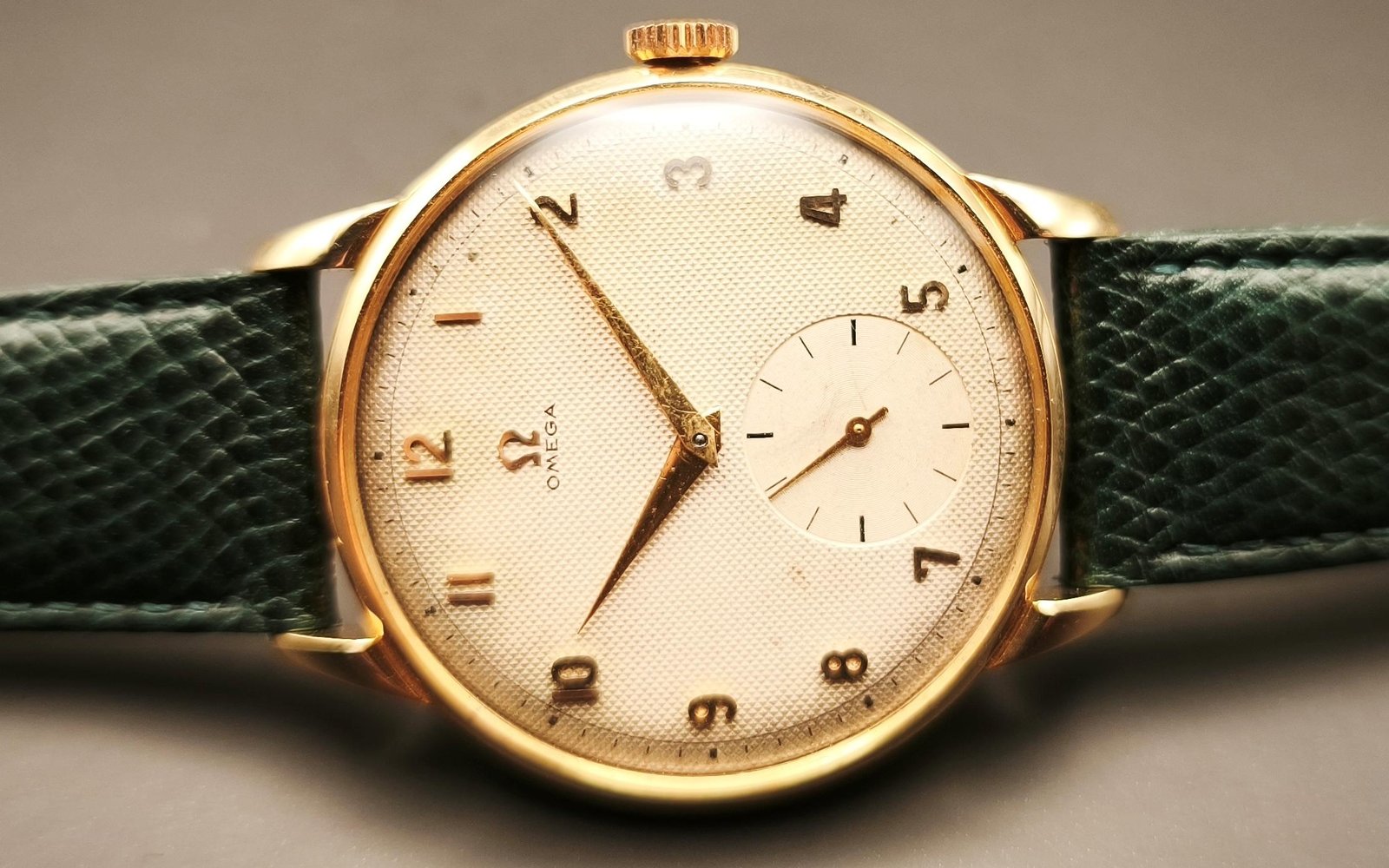
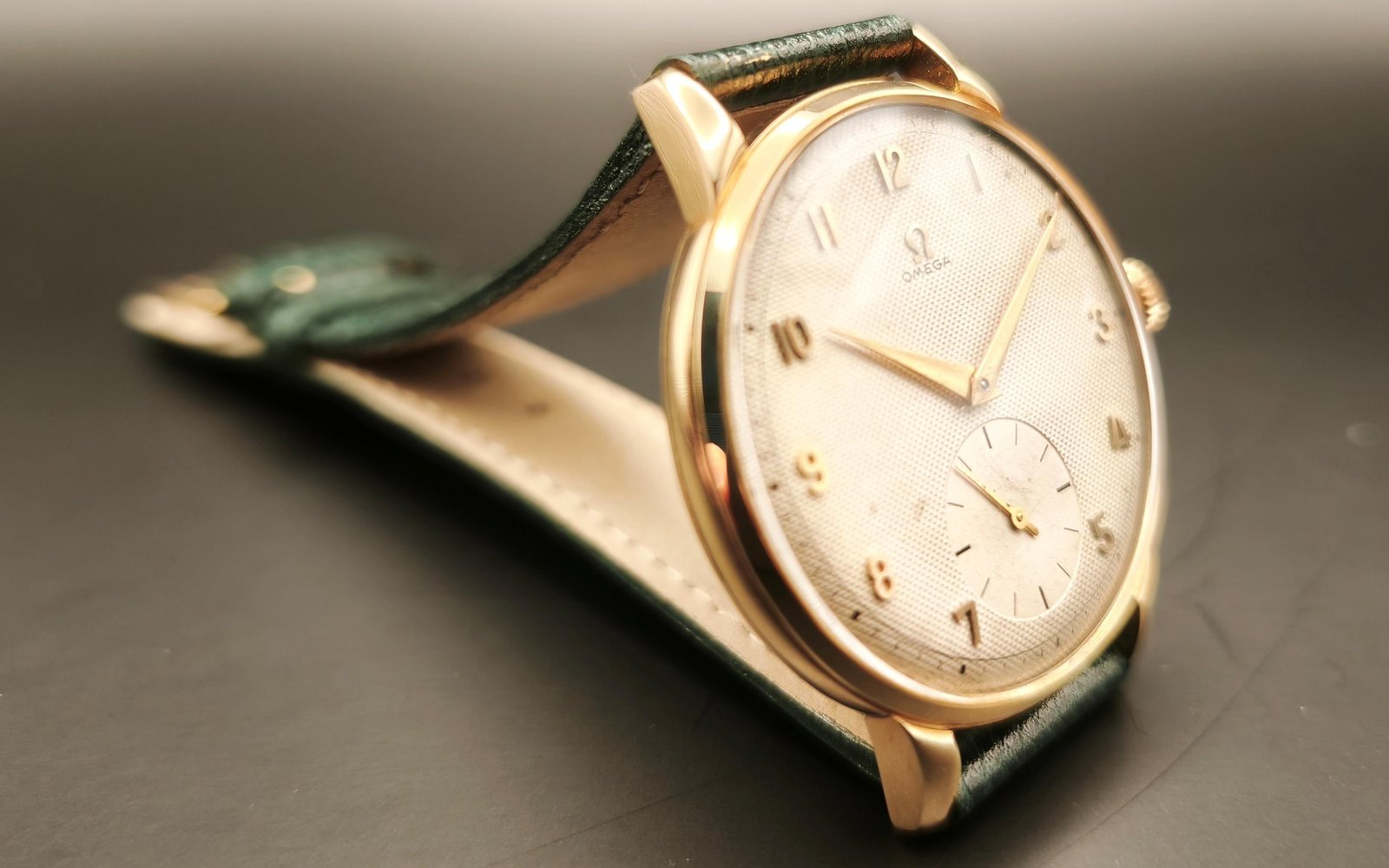
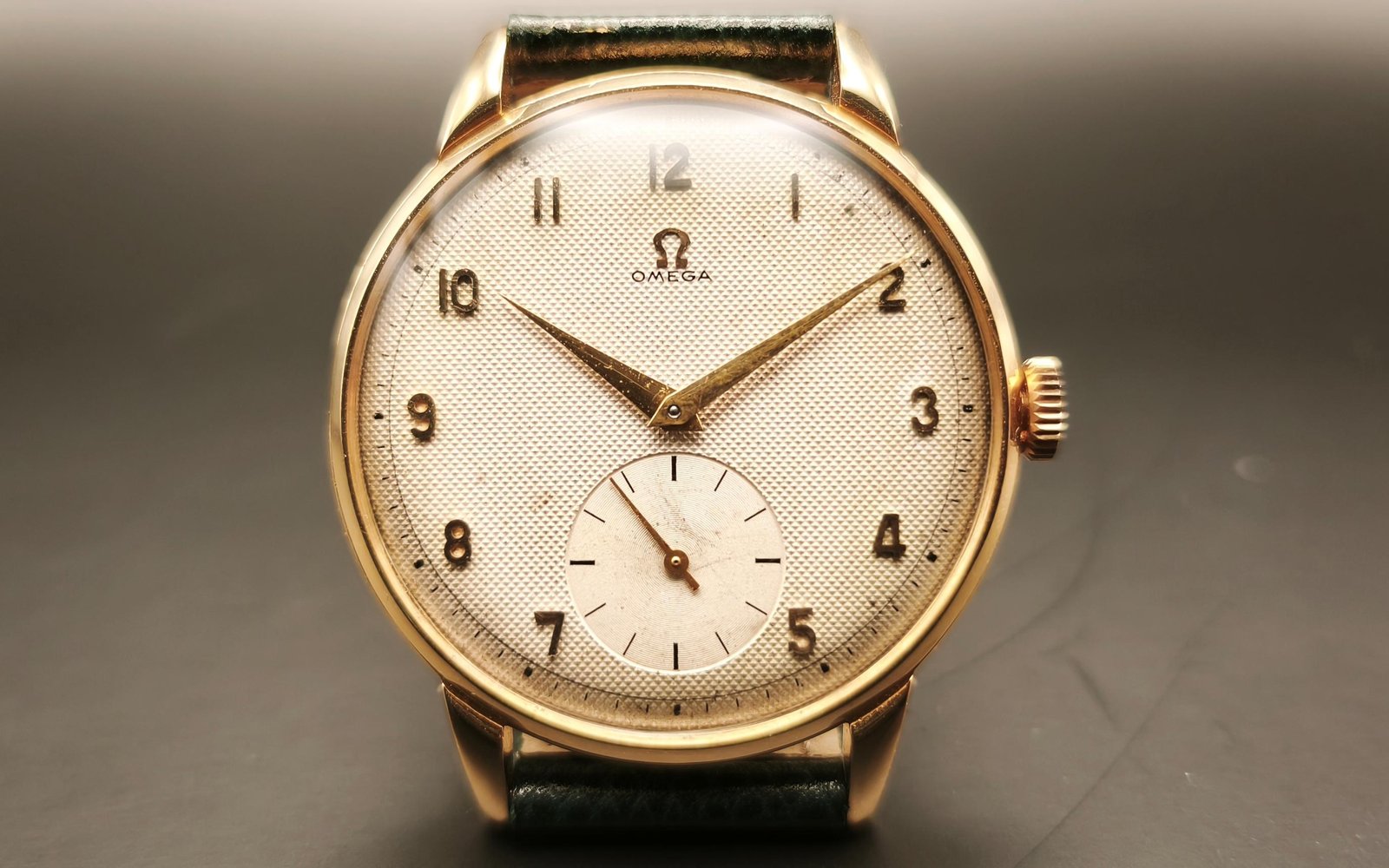
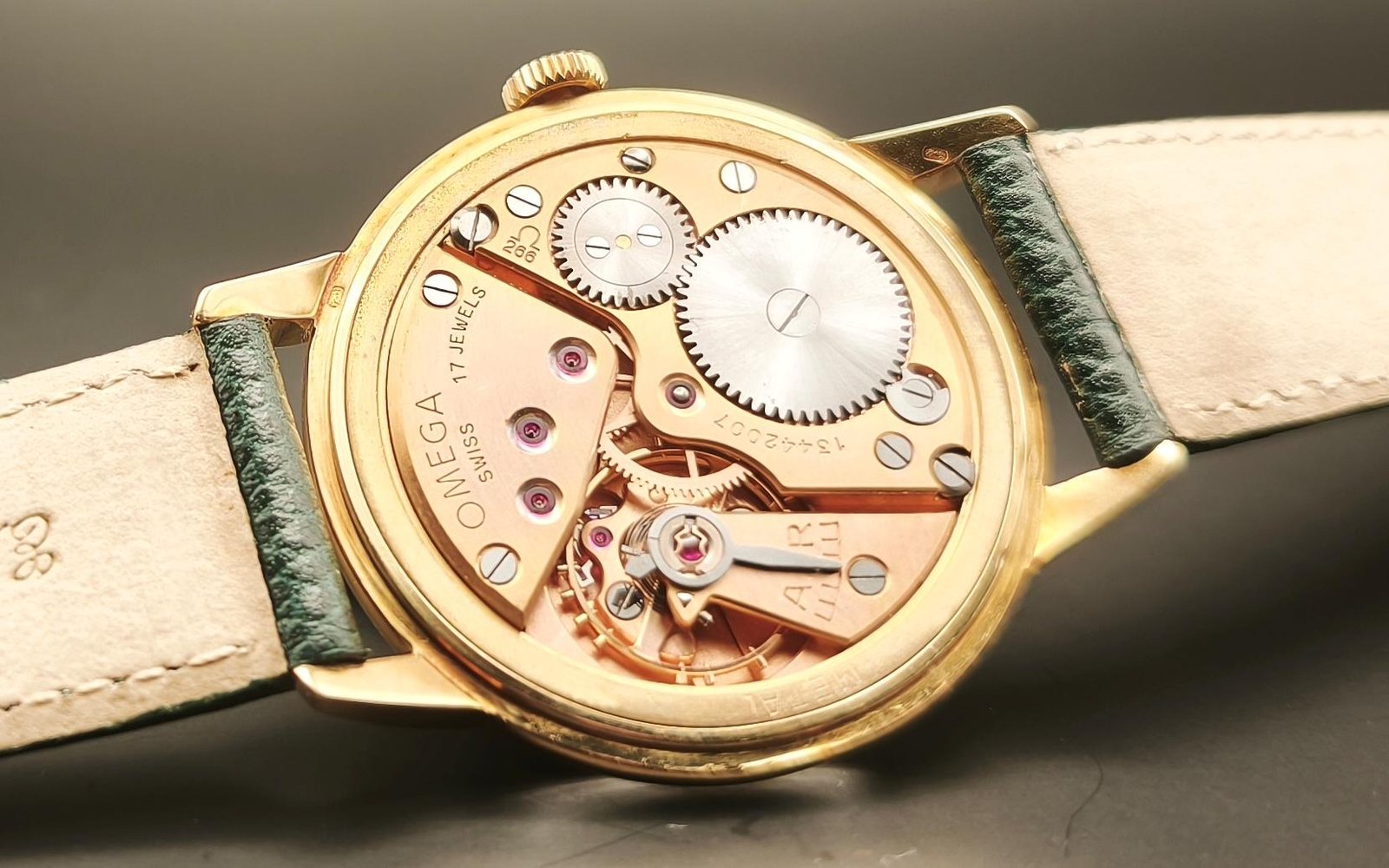
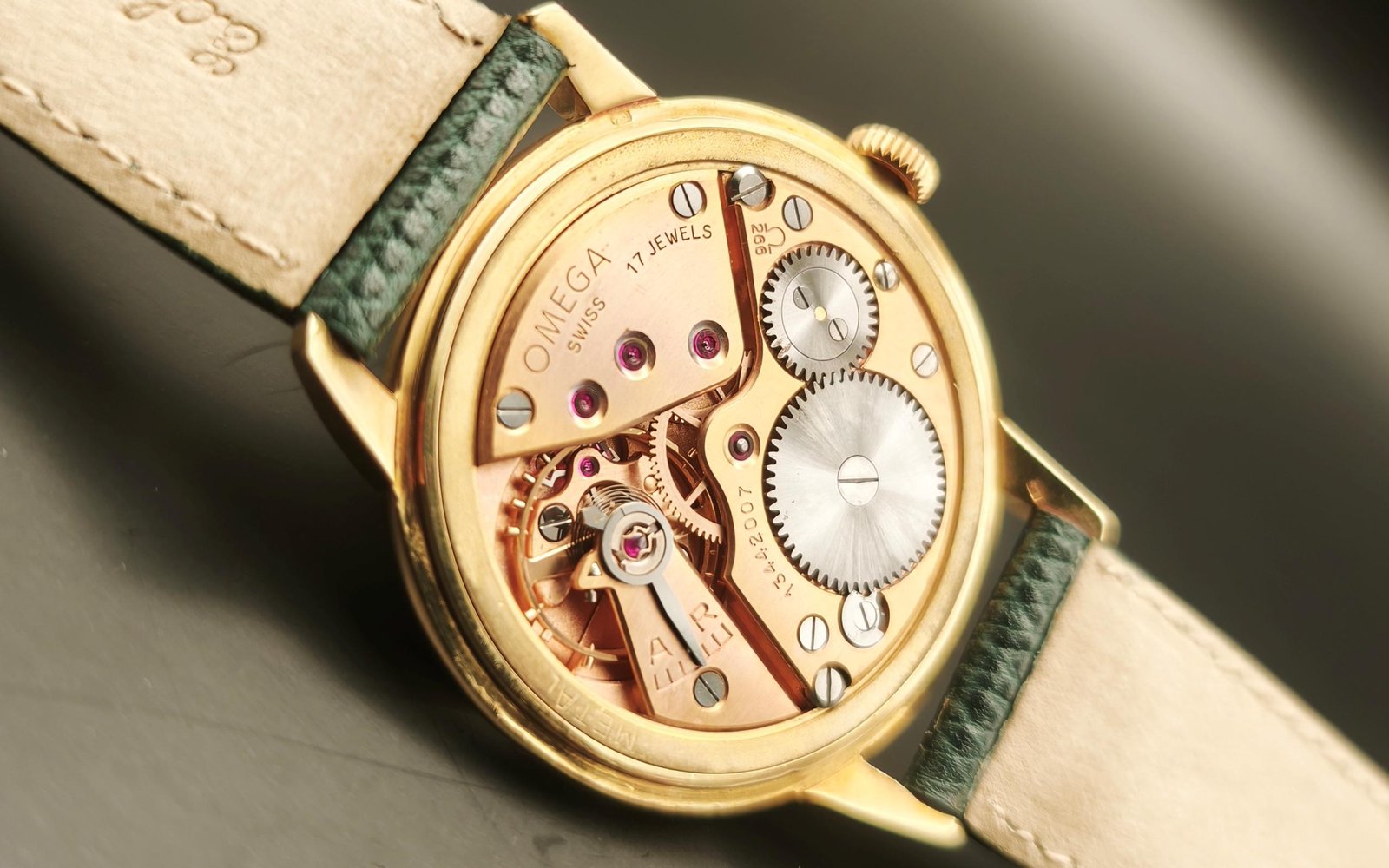
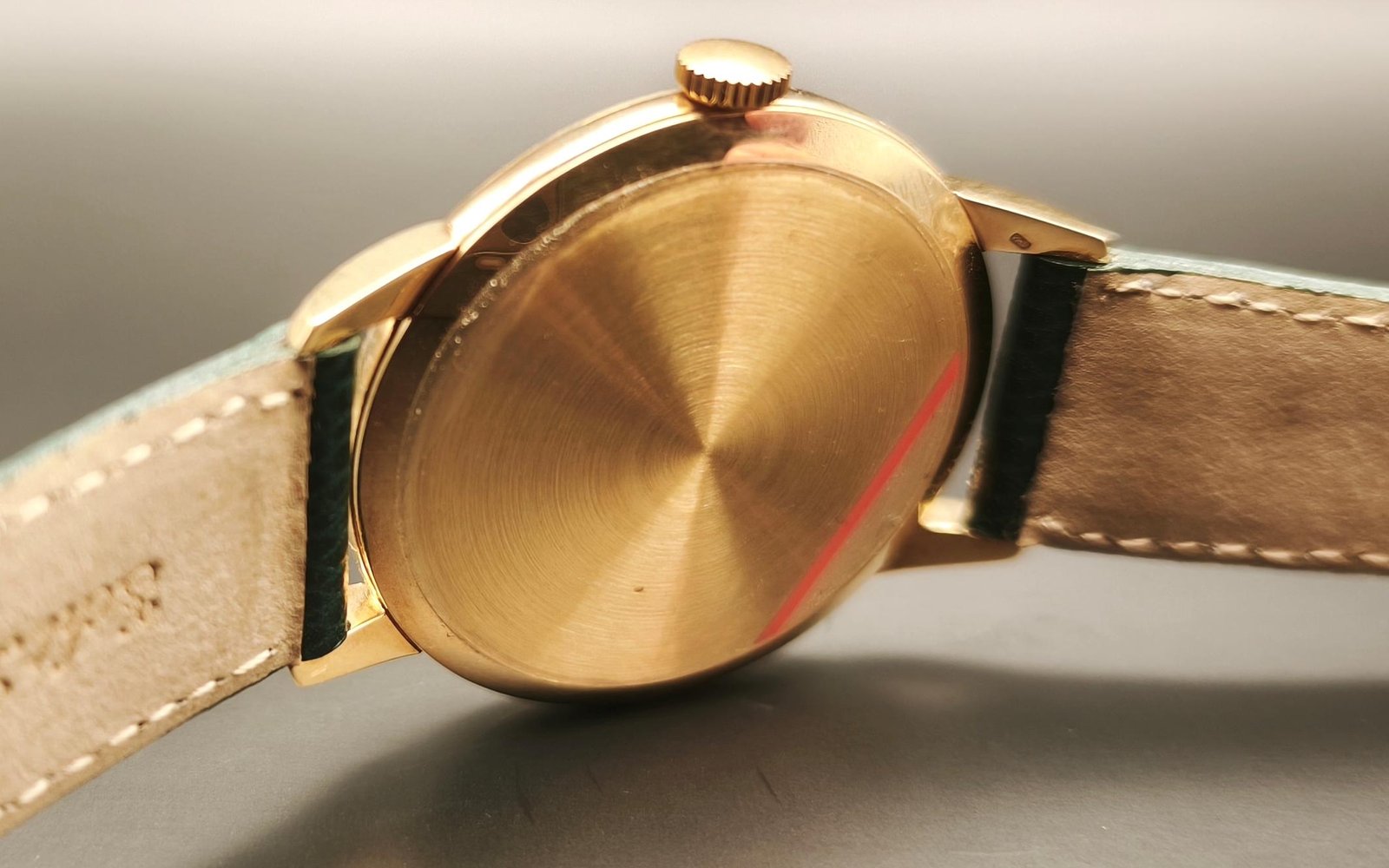
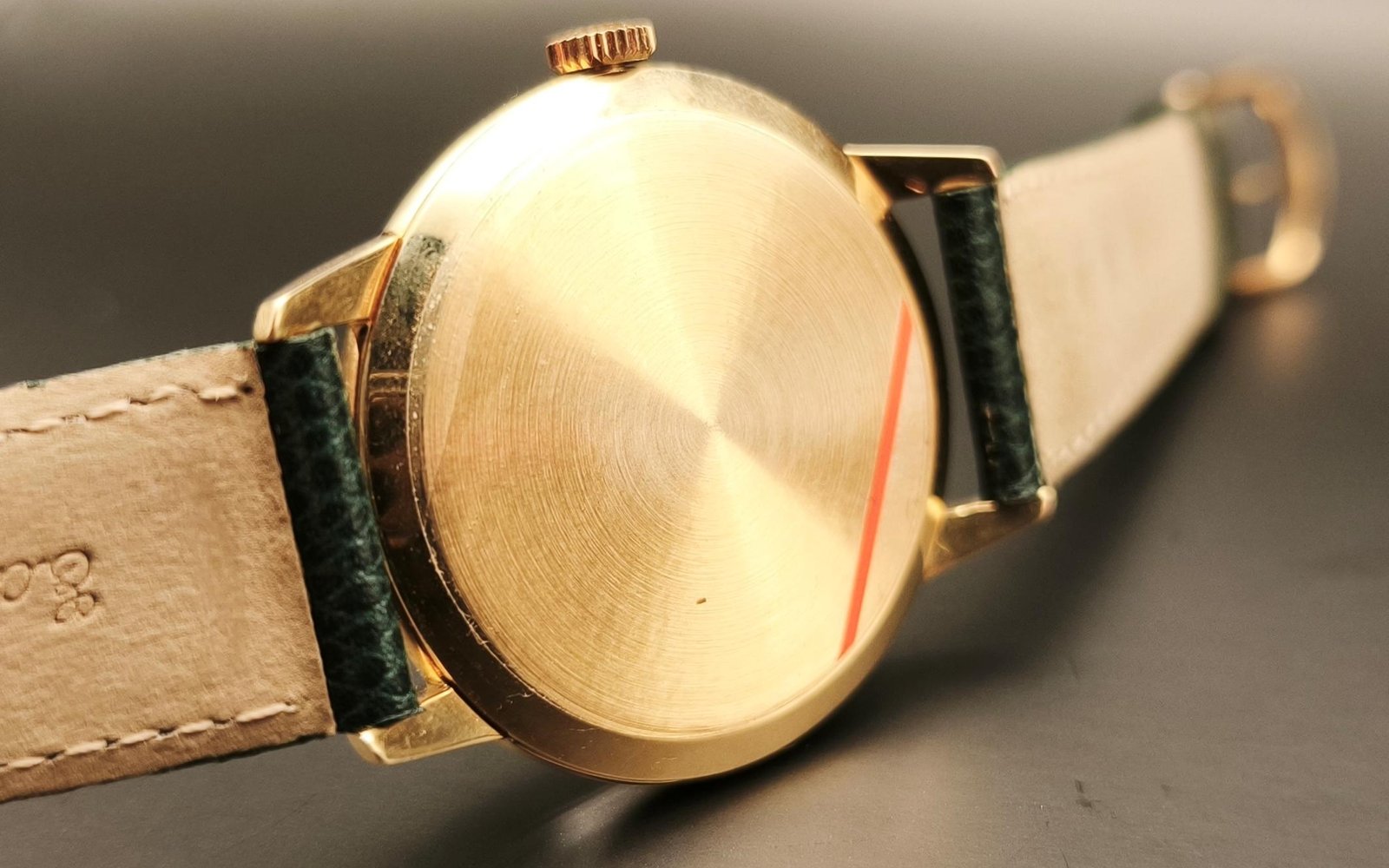
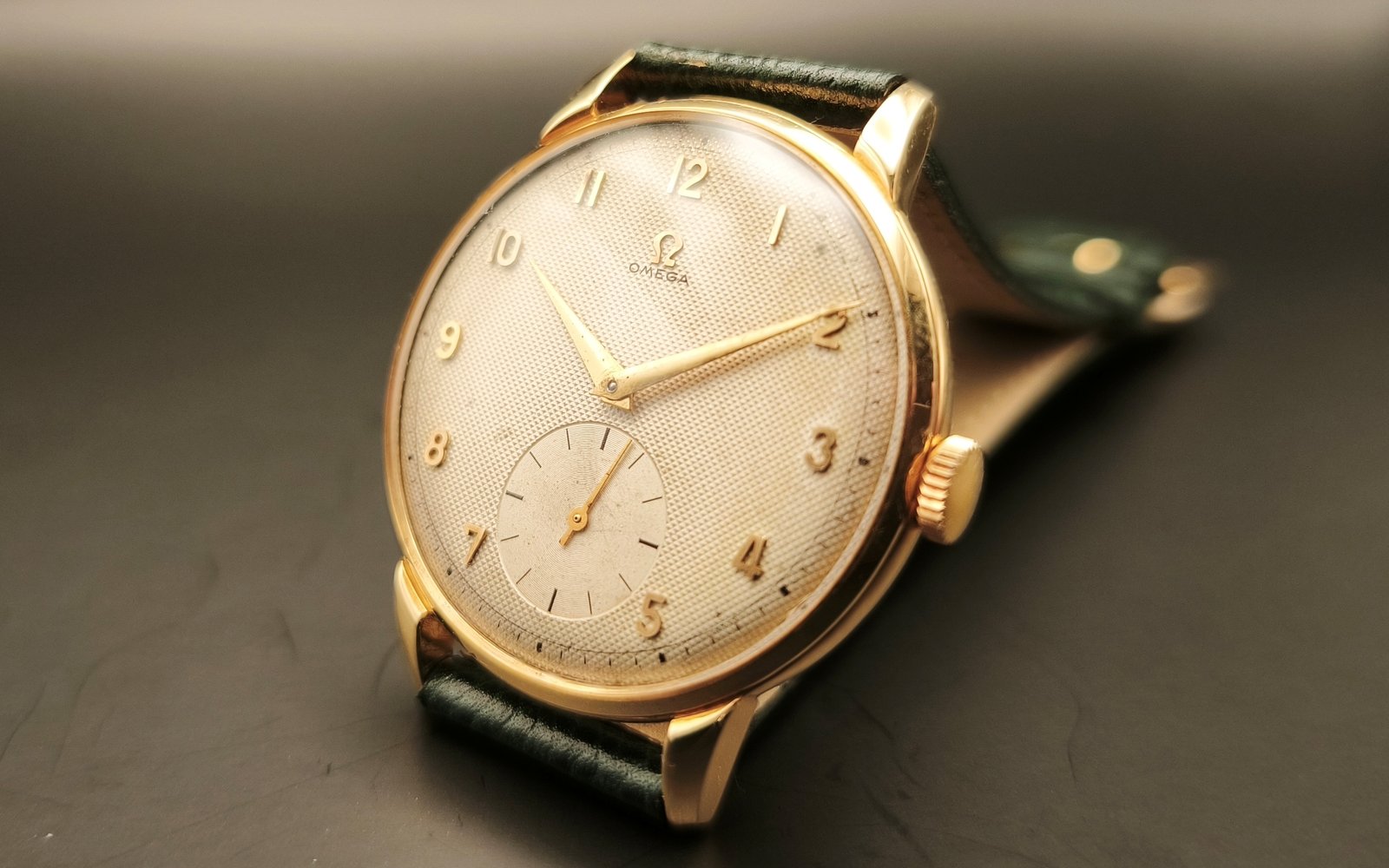
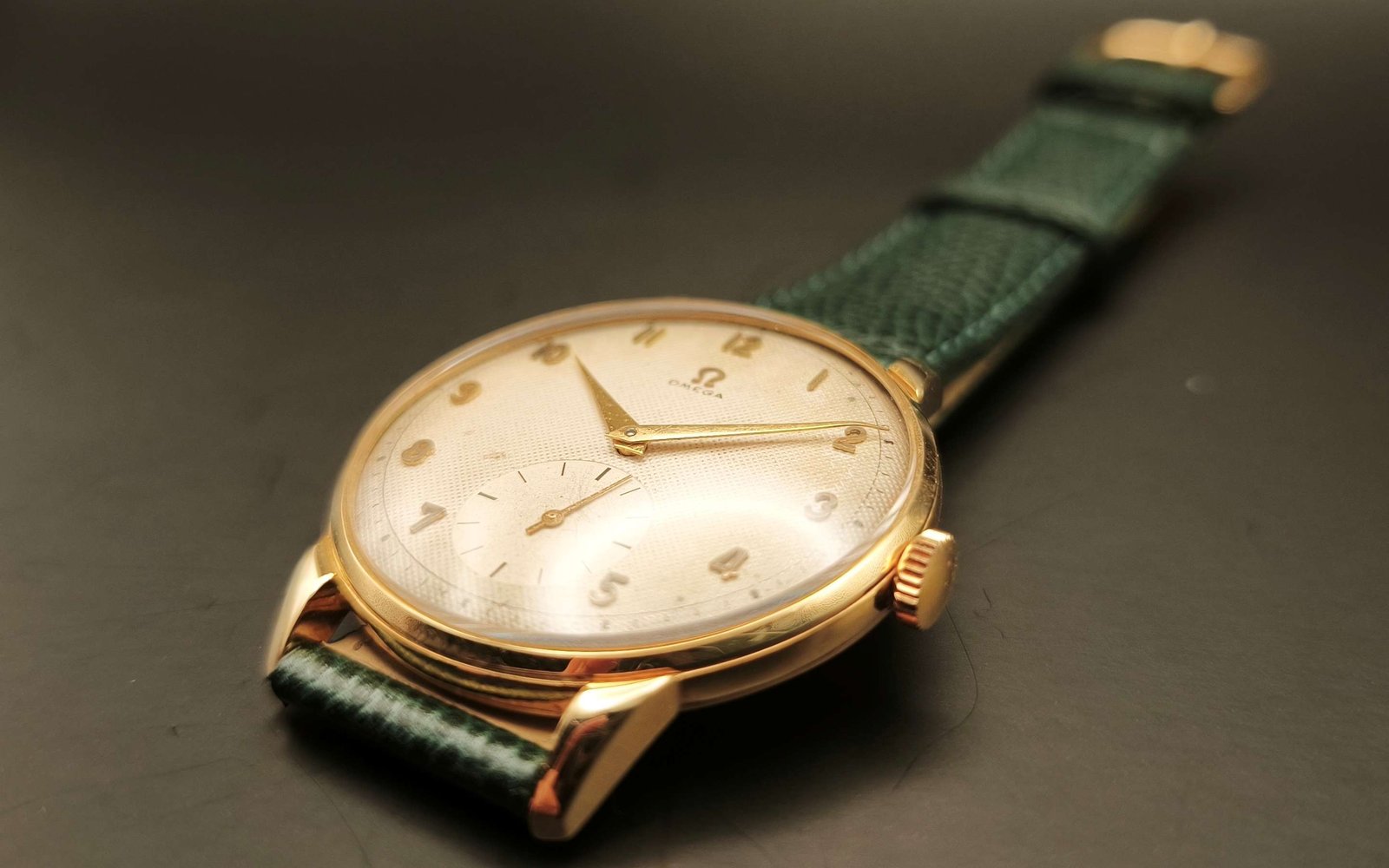
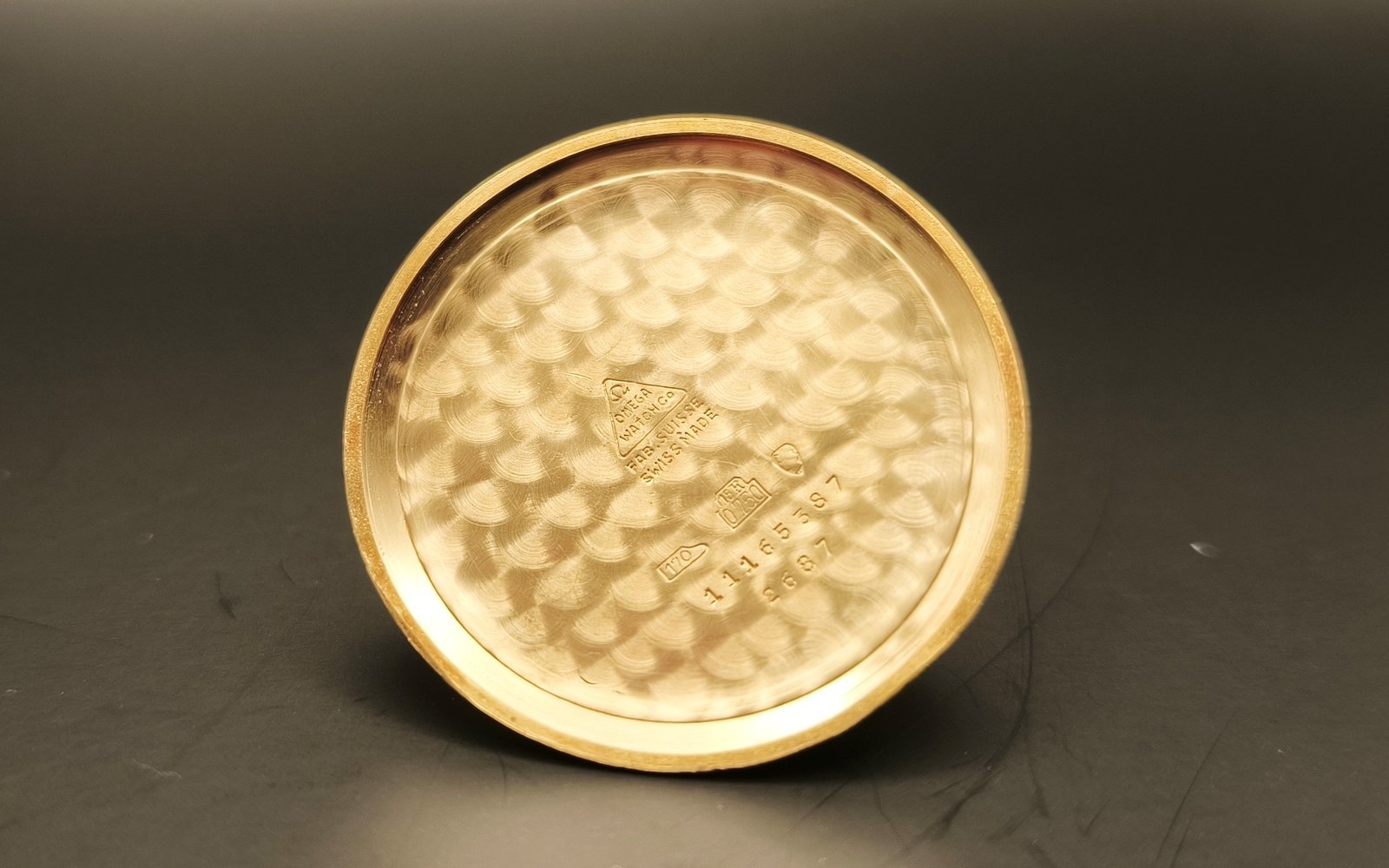
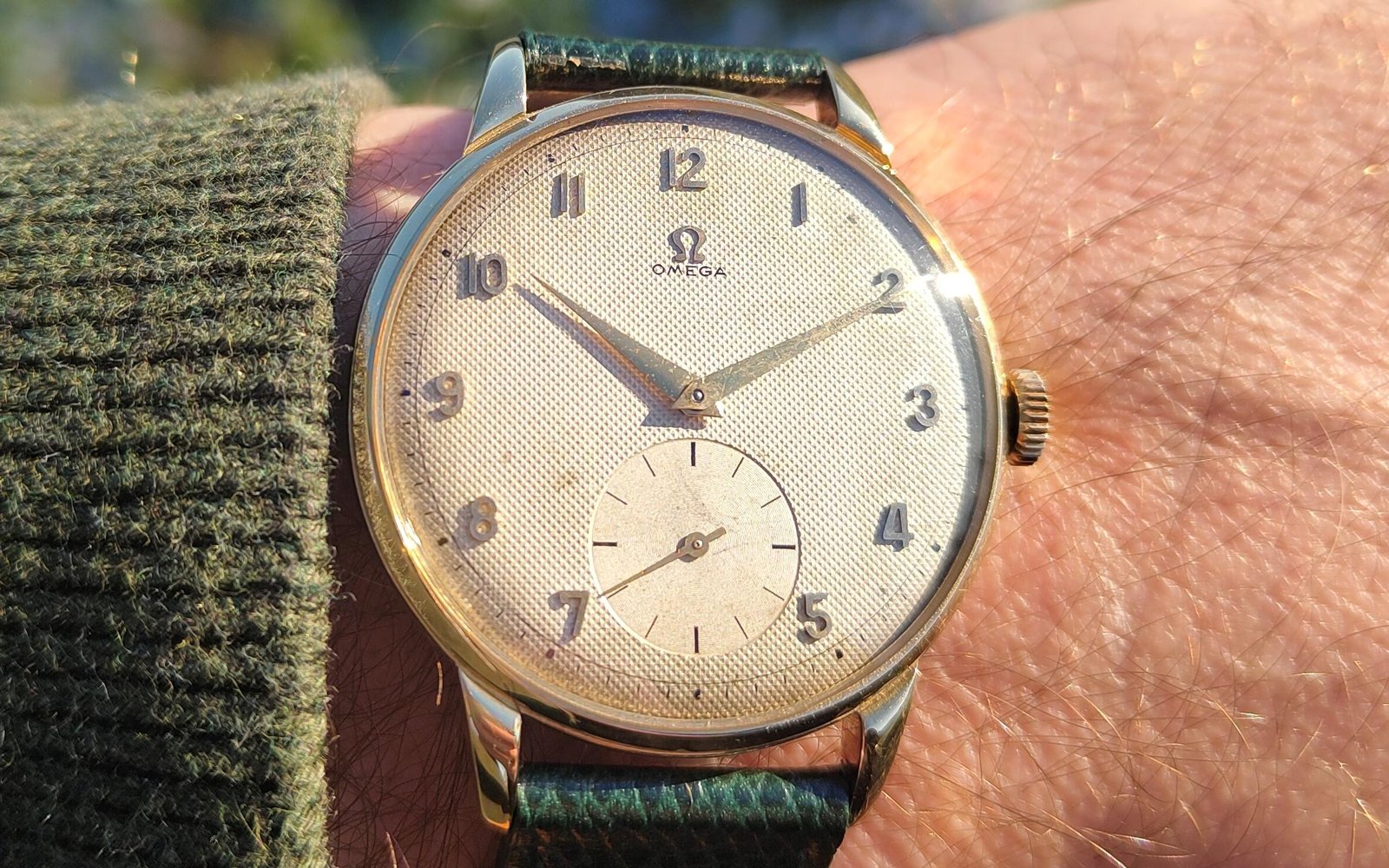
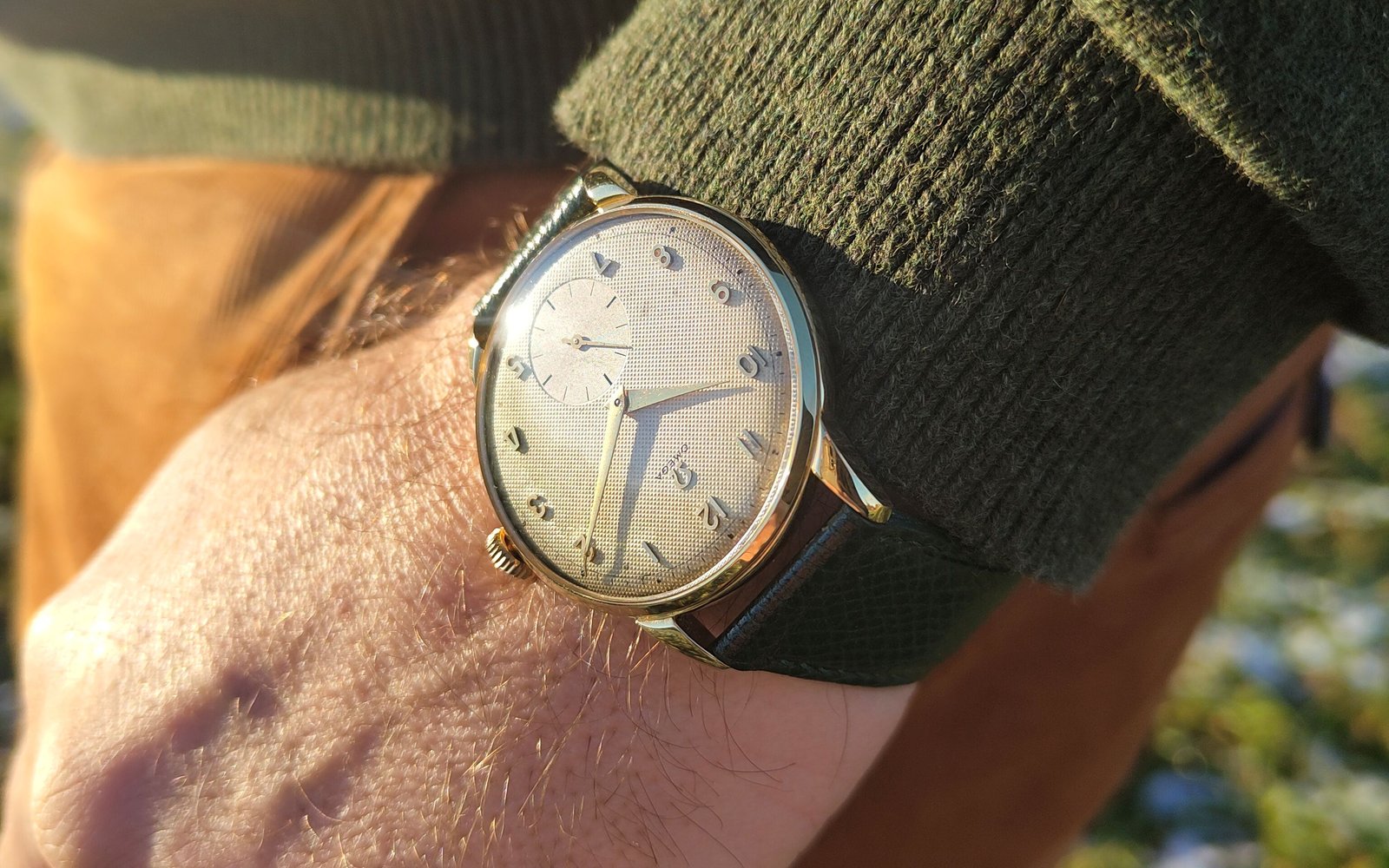
Omega 18K gold, 1950s
Year of manufacture: 1952
Material: 18-carat gold
Movement: Hand-wound
Caliber: 266 (in-house)
Ref.: 2687
Diameter: 37mm (measured without crown)
In 1952, humanity learned to measure more than time. The UNIVAC I calculated numbers with machine-like precision, while television quietly altered how people perceived the world — distant moments suddenly felt close. Jet aircraft began to compress continents, redefining distance itself.
In arts and literature, modernist movements flourished. That same year, John Cage premiered a work that would quietly redefine music itself: 4′33″. At its first performance in Woodstock, New York, pianist David Tudor sat at the piano for four minutes and thirty-three seconds without playing a single deliberate note. The piece unfolds in three movements, yet its substance lies not in composed sound, but in everything that happens within that frame of time — the subtle rustle of an audience, a distant cough, the architecture of the room breathing softly around those present.
Cage had once entered an anechoic chamber expecting silence, only to discover that true silence does not exist; he could still hear the hum of his own body. From that insight emerged a radical proposition: music is not merely what is performed, but what is perceived. 4′33″ transformed absence into awareness. In an age fascinated by calculation and acceleration, it asked listeners not to measure time, but to inhabit it.
Design followed a similar philosophy. The honest lines of mid-century modern furniture, shaped by designers like Charles Eames and Ray Eames, rejected excess in favor of purpose and balance. Just as their work reduced form to essence, Cage reduced music to its purest condition: attention.
It was an era that believed progress should be thoughtful, not hurried — that clarity mattered more than ornament, and intention more than noise.
More than a watch. A window into history.
Baujahr: 1940
Material: Gold
Uhrwerk: Mechanisch
Caliber: 30t2
Durchmesser: 37mm
Omega 18K gold, 1950s
Year of manufacture: 1952
Material: 18 Karat Gold
Movement: Hand-wound
Caliber: 266 (in-house)
Ref.: 2687
Diameter: 37mm
(measured without crown)
In 1952, humanity learned to measure more than time. The UNIVAC I calculated numbers with machine-like precision, while television quietly altered how people perceived the world — distant moments suddenly felt close. Jet aircraft began to compress continents, redefining distance itself.
In arts and literature, modernist movements flourished. That same year, John Cage premiered a work that would quietly redefine music itself: 4′33″. At its first performance in Woodstock, New York, pianist David Tudor sat at the piano for four minutes and thirty-three seconds without playing a single deliberate note. The piece unfolds in three movements, yet its substance lies not in composed sound, but in everything that happens within that frame of time — the subtle rustle of an audience, a distant cough, the architecture of the room breathing softly around those present.
Cage had once entered an anechoic chamber expecting silence, only to discover that true silence does not exist; he could still hear the hum of his own body. From that insight emerged a radical proposition: music is not merely what is performed, but what is perceived. 4′33″ transformed absence into awareness. In an age fascinated by calculation and acceleration, it asked listeners not to measure time, but to inhabit it.
Design followed a similar philosophy. The honest lines of mid-century modern furniture, shaped by designers like Charles Eames and Ray Eames, rejected excess in favor of purpose and balance. Just as their work reduced form to essence, Cage reduced music to its purest condition: attention.
It was an era that believed progress should be thoughtful, not hurried — that clarity mattered more than ornament, and intention more than noise.
More than a watch. A window into history.