
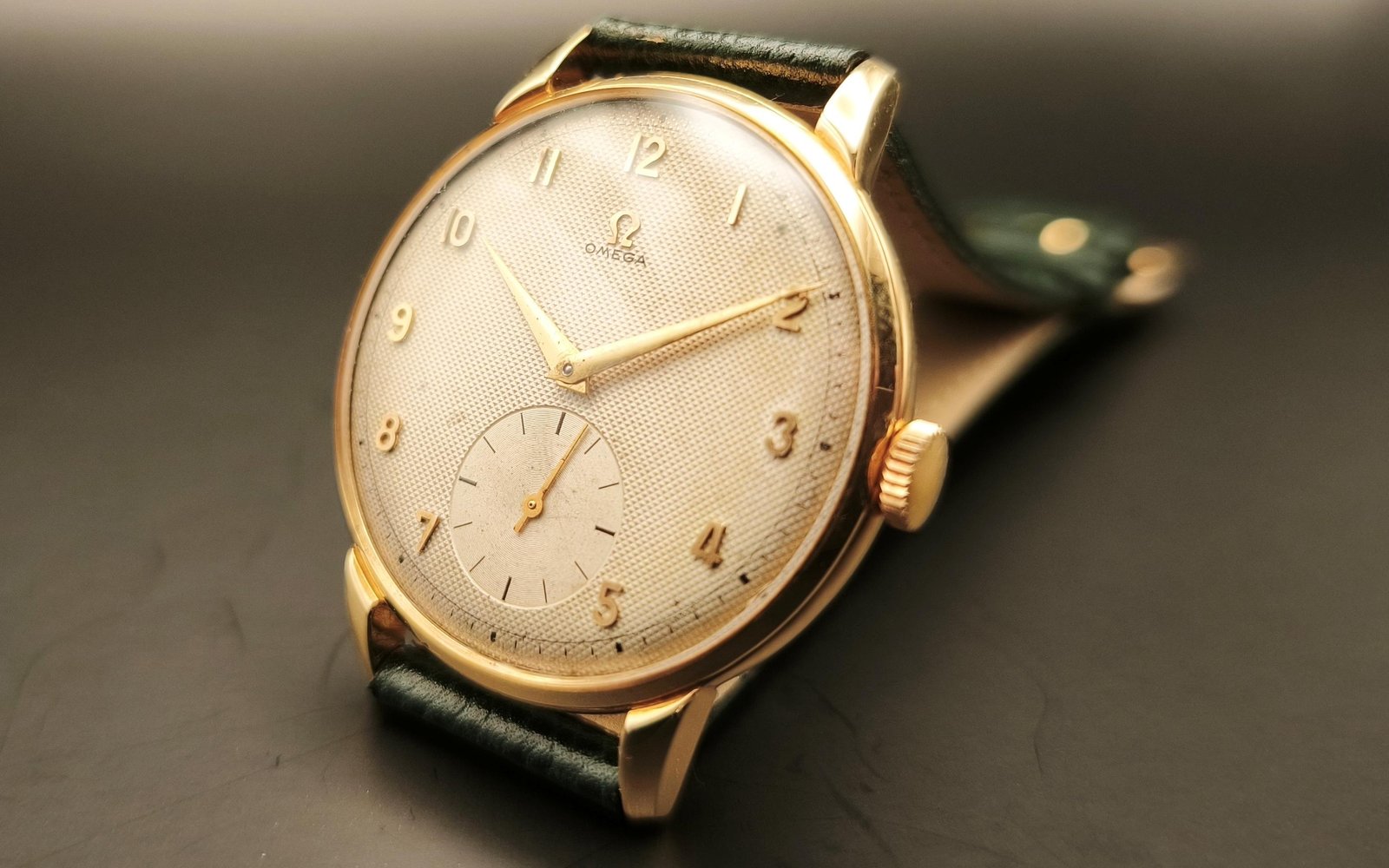
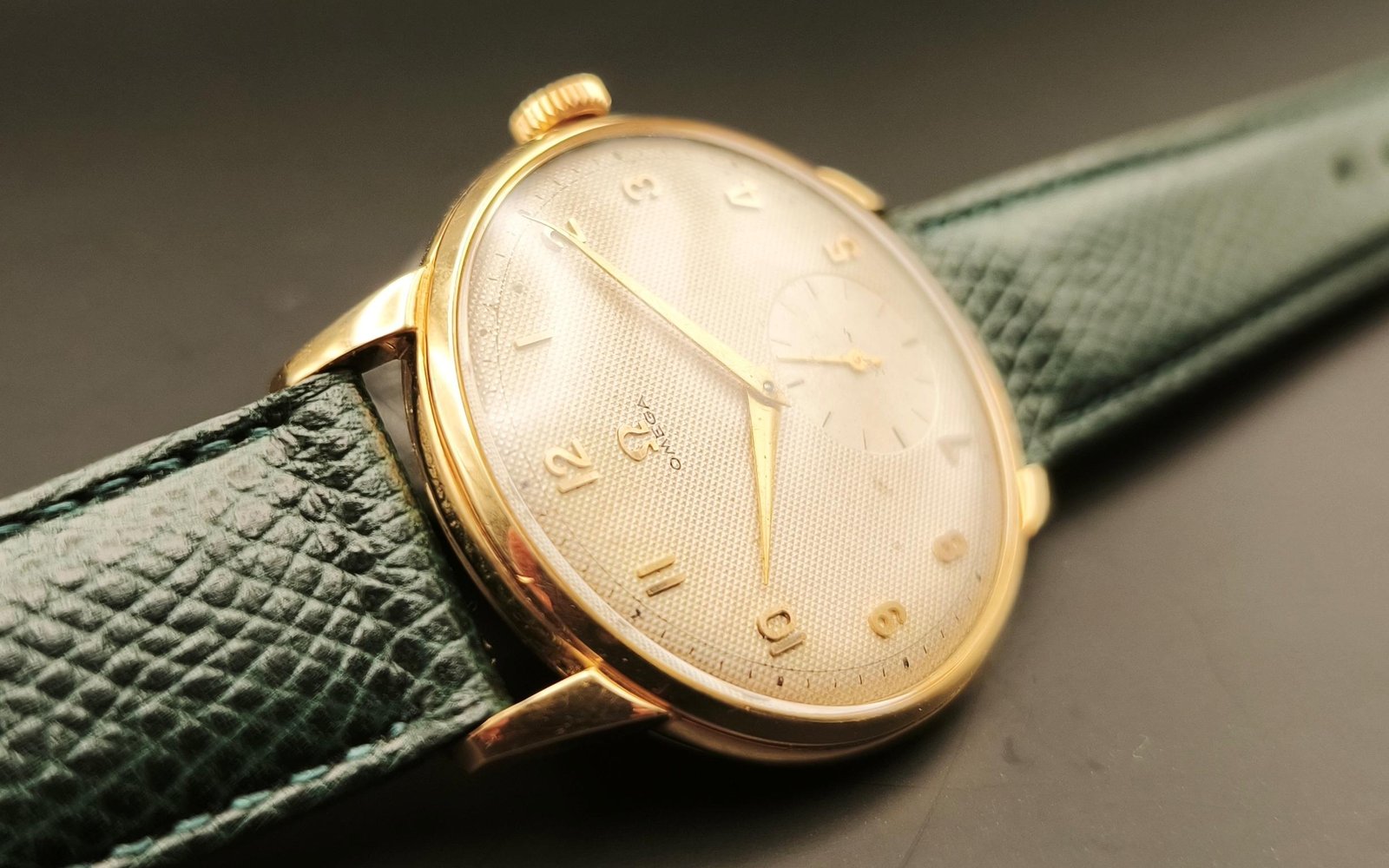
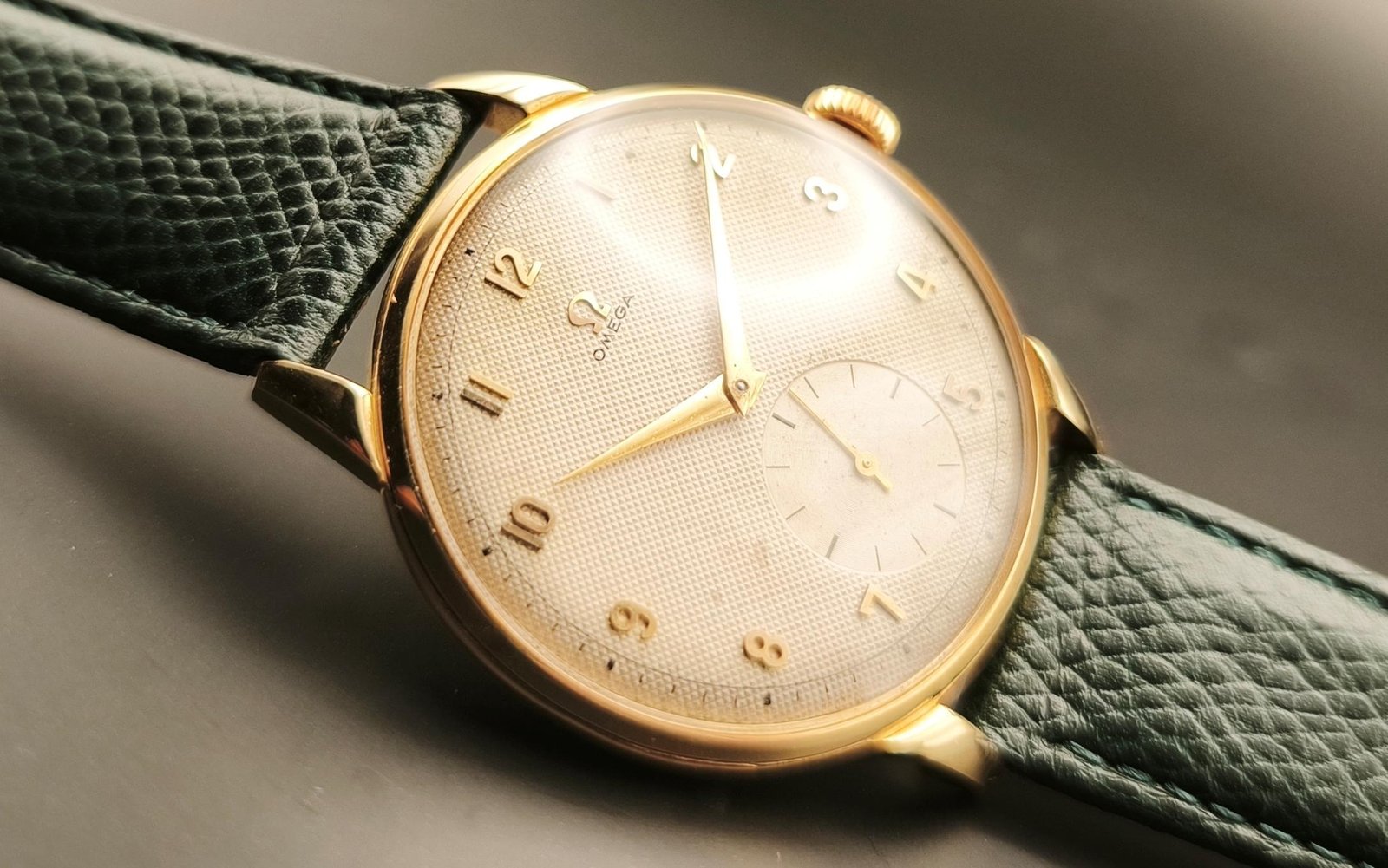
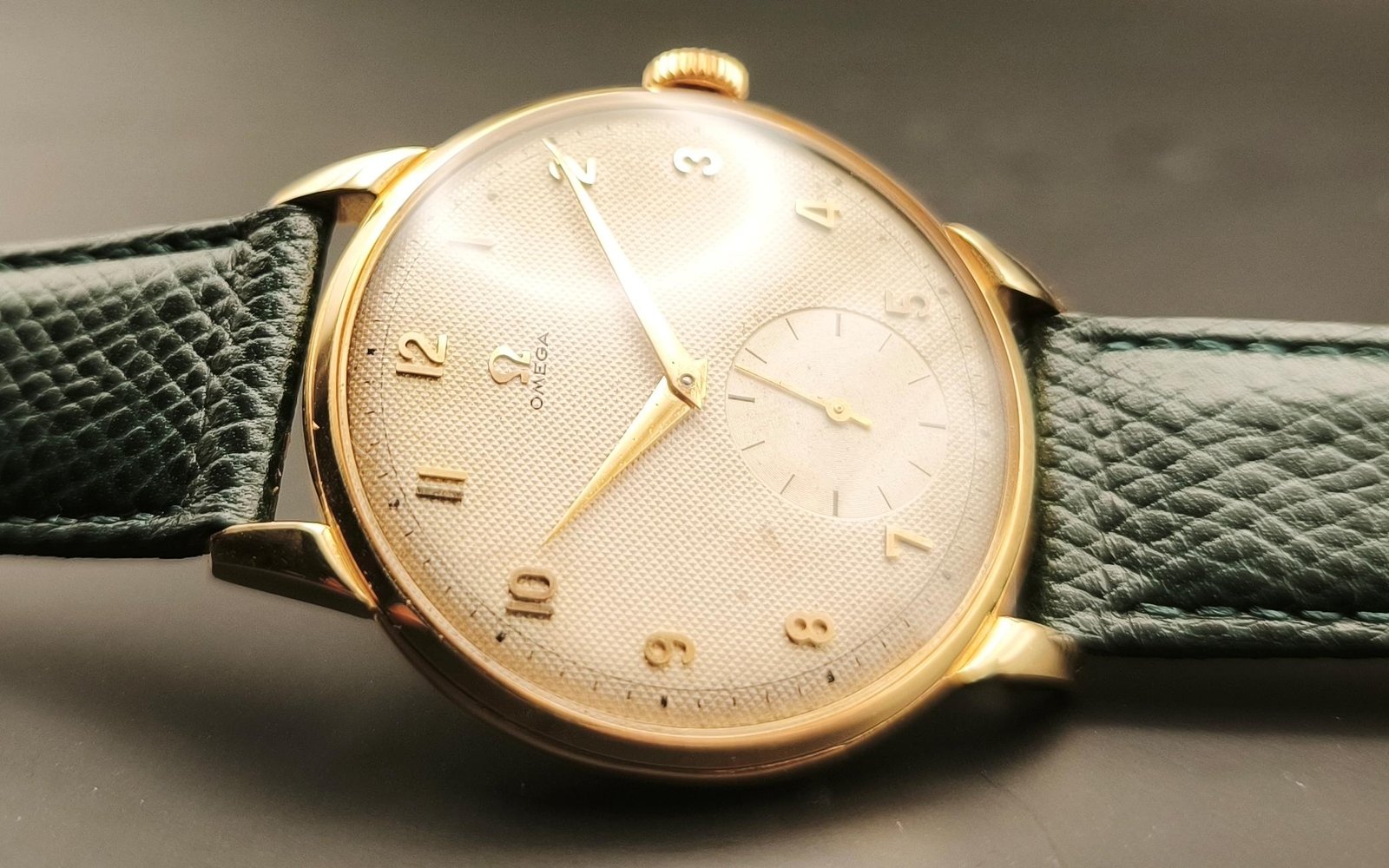
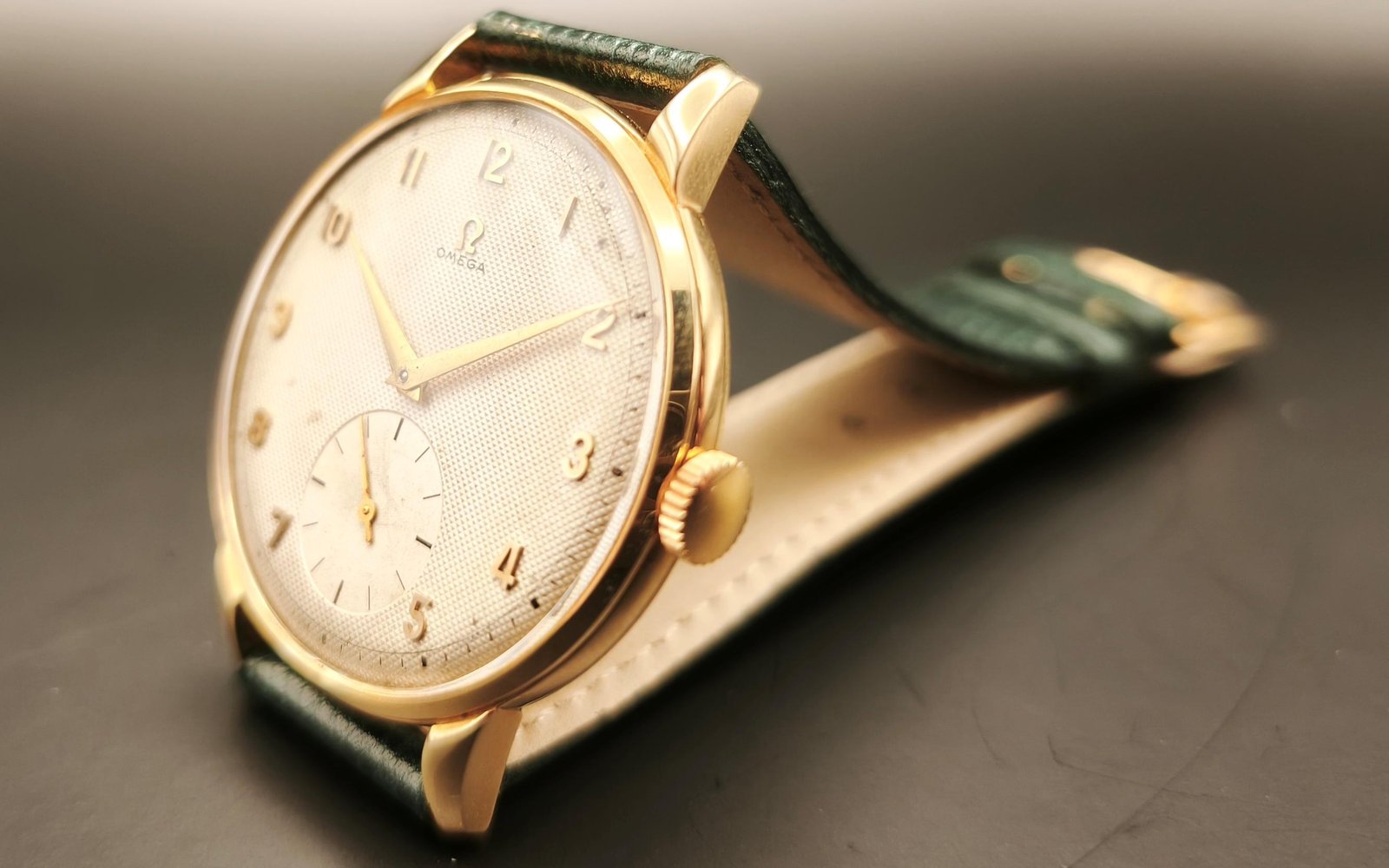
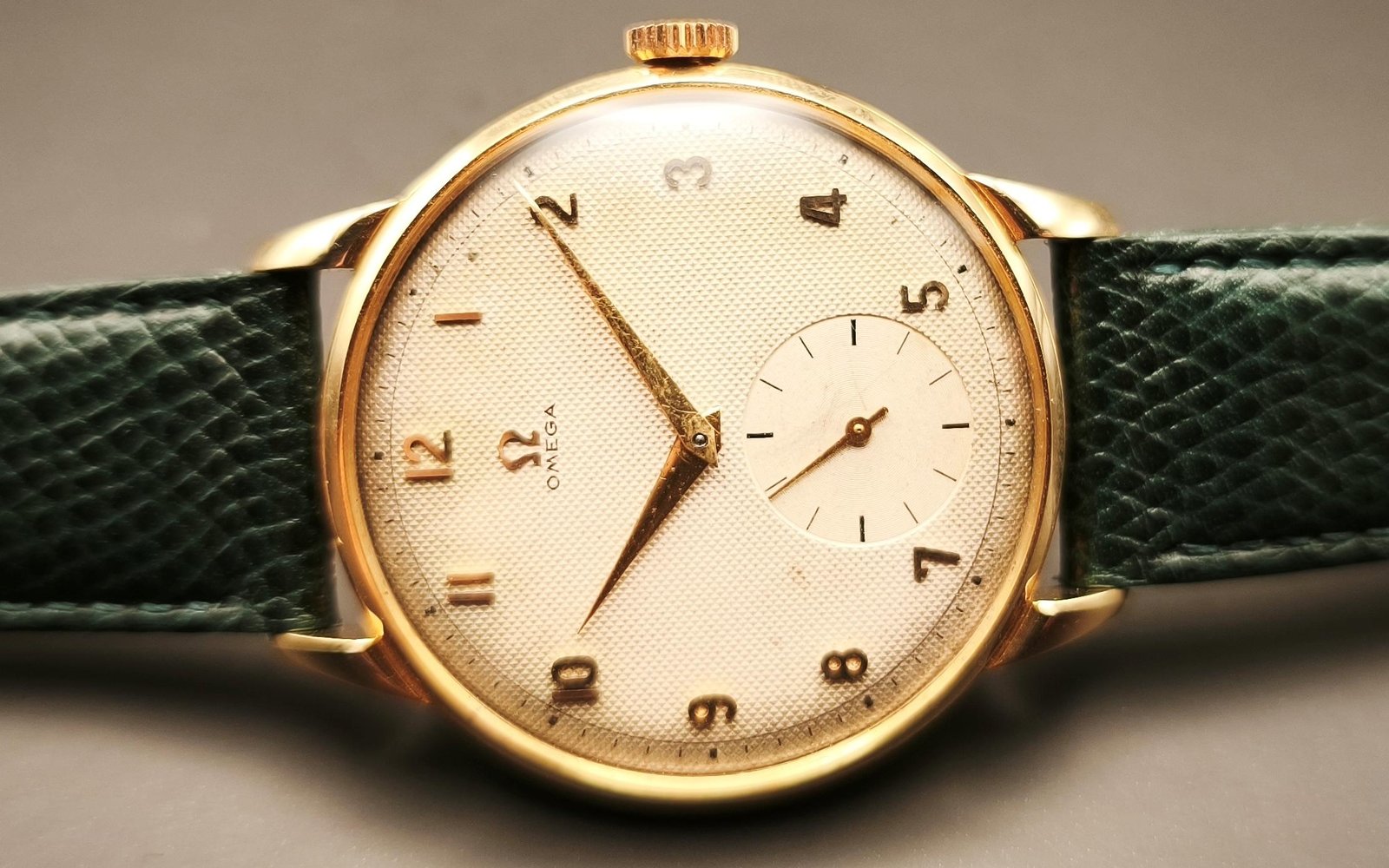
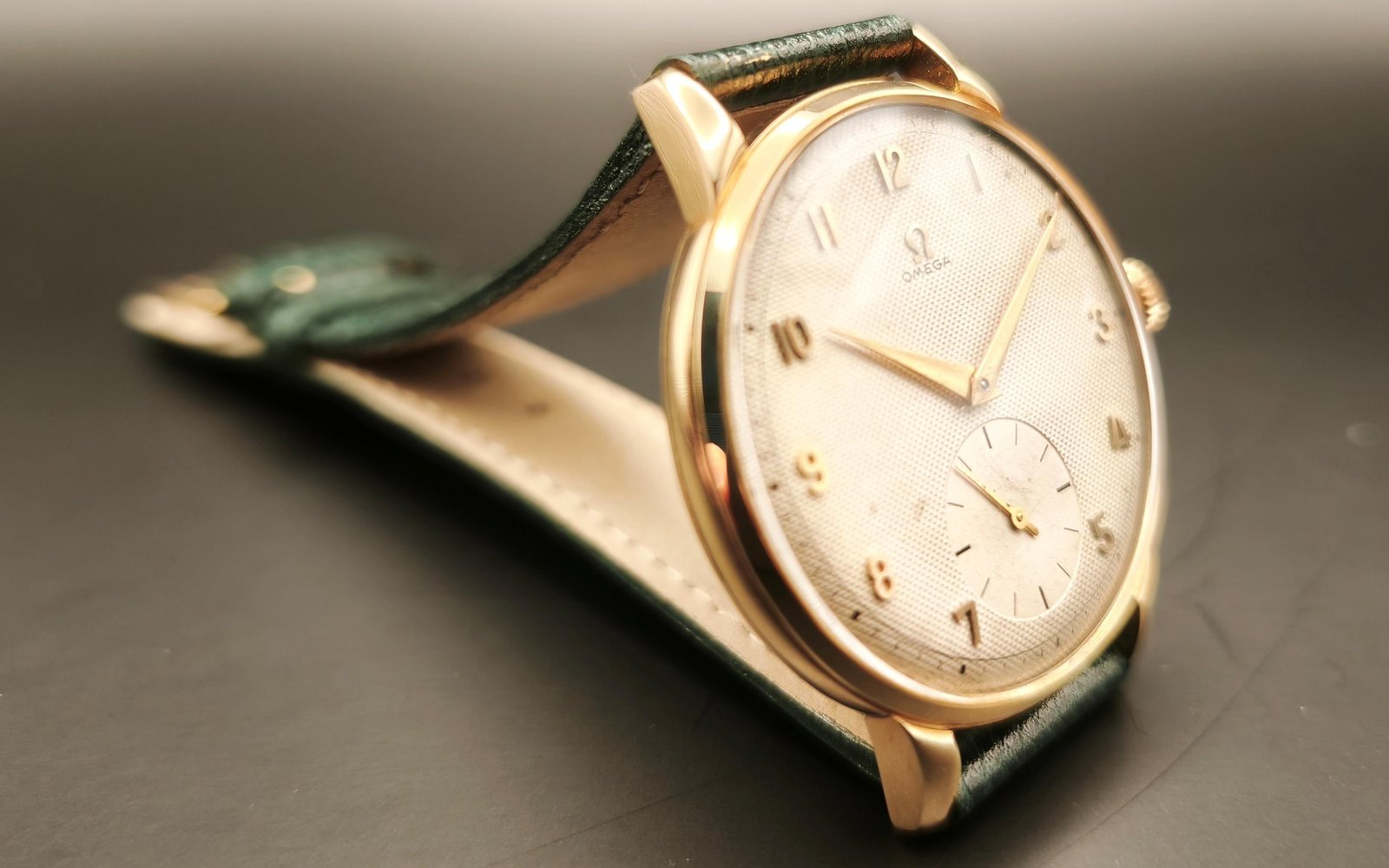
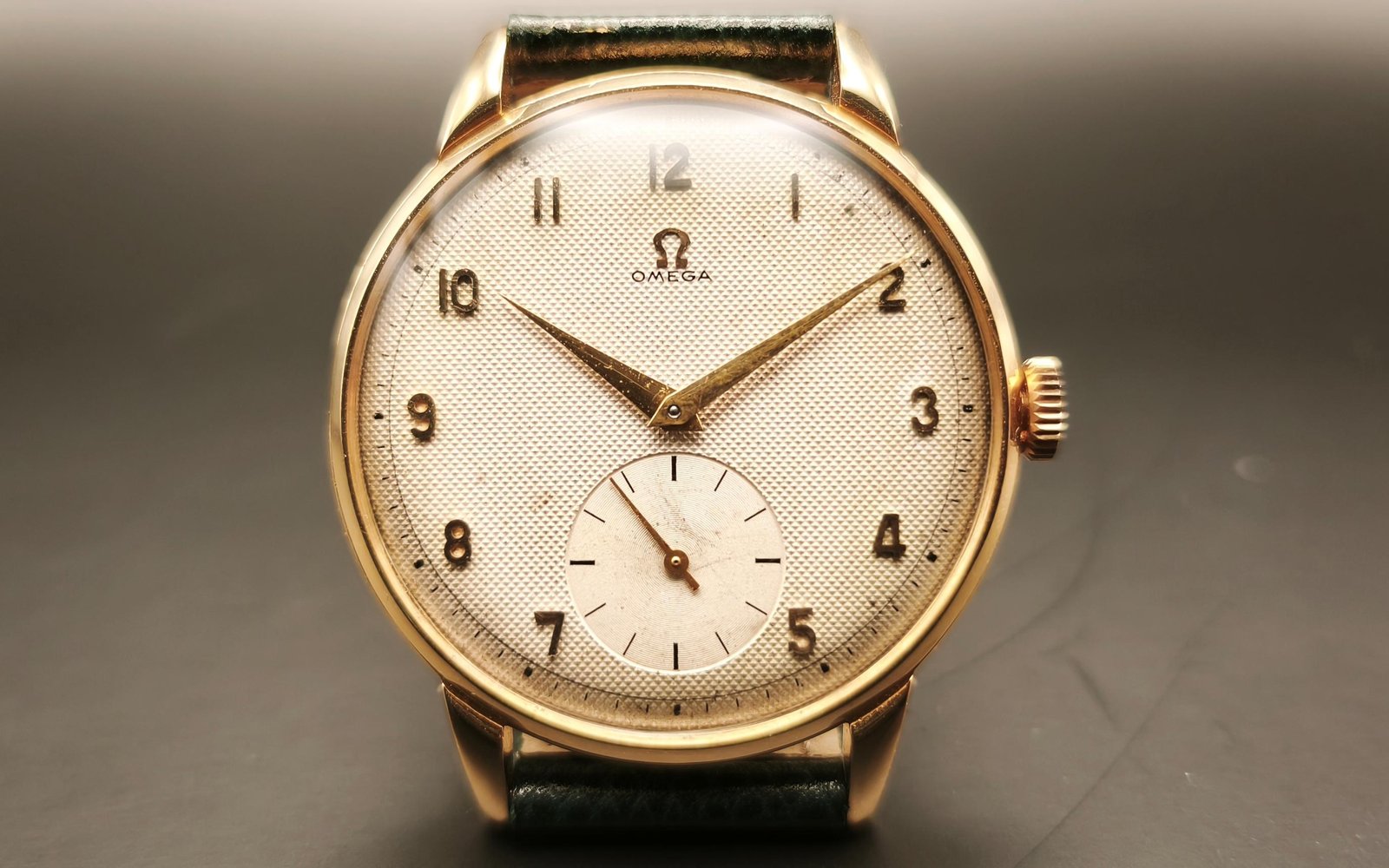
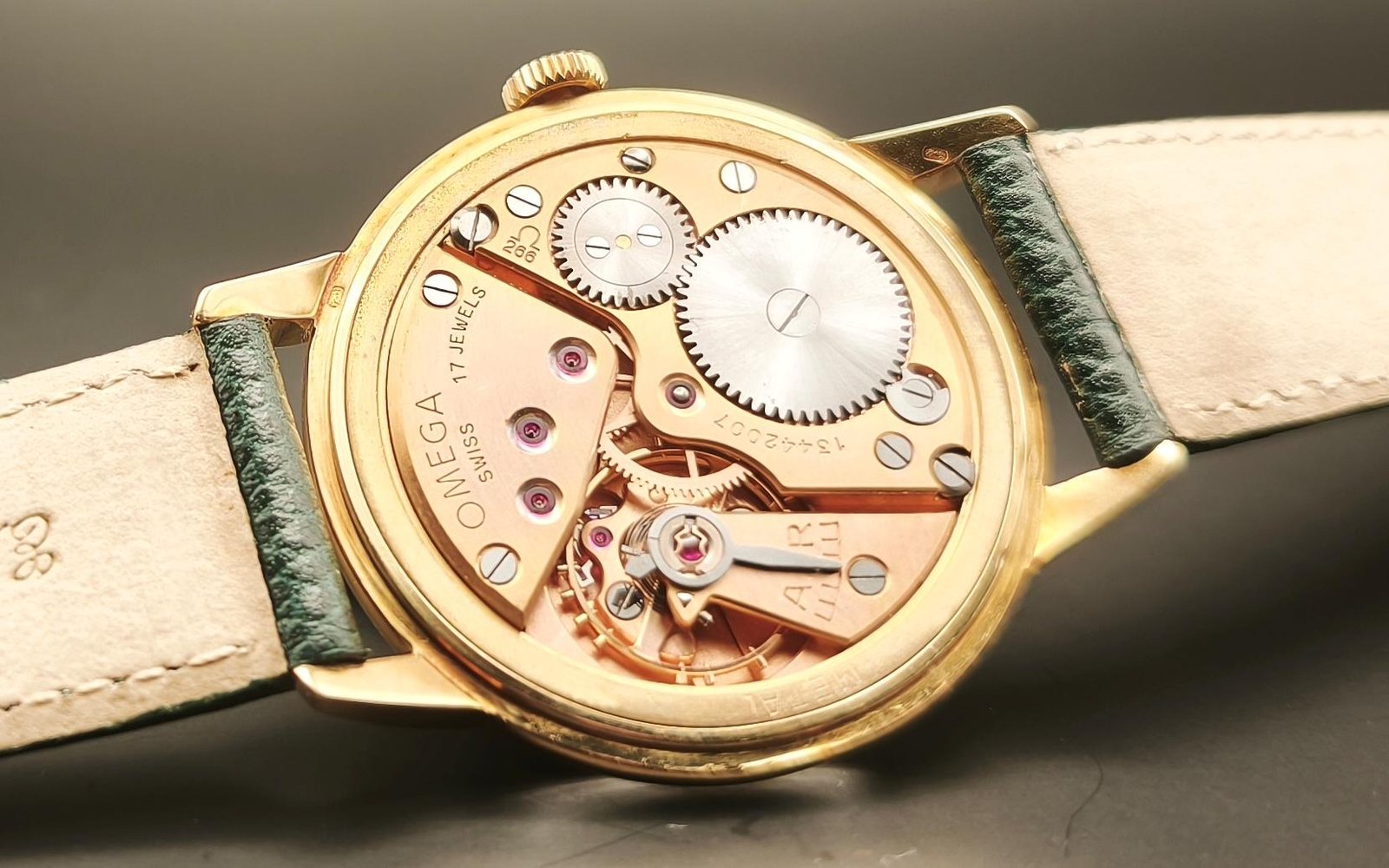
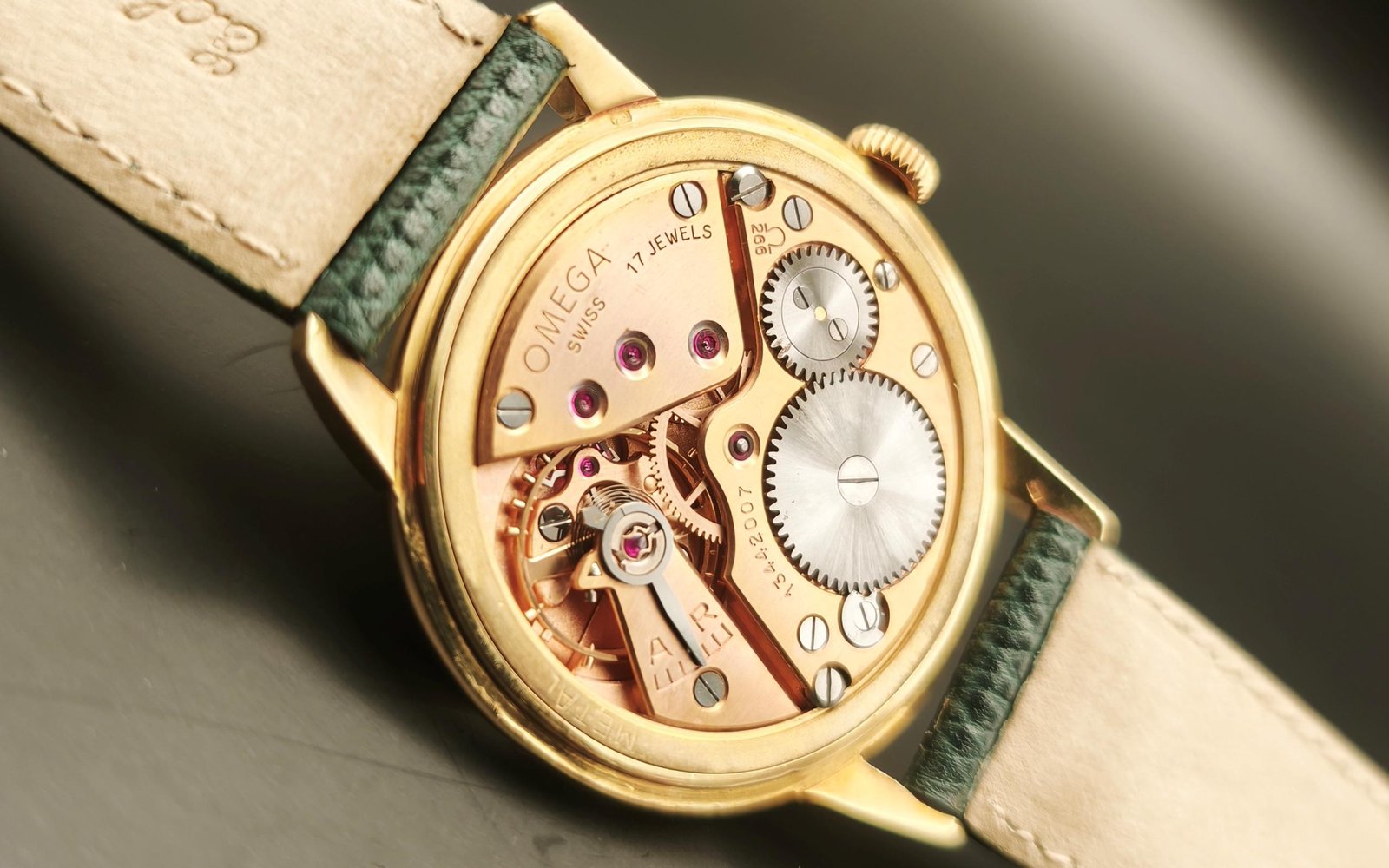
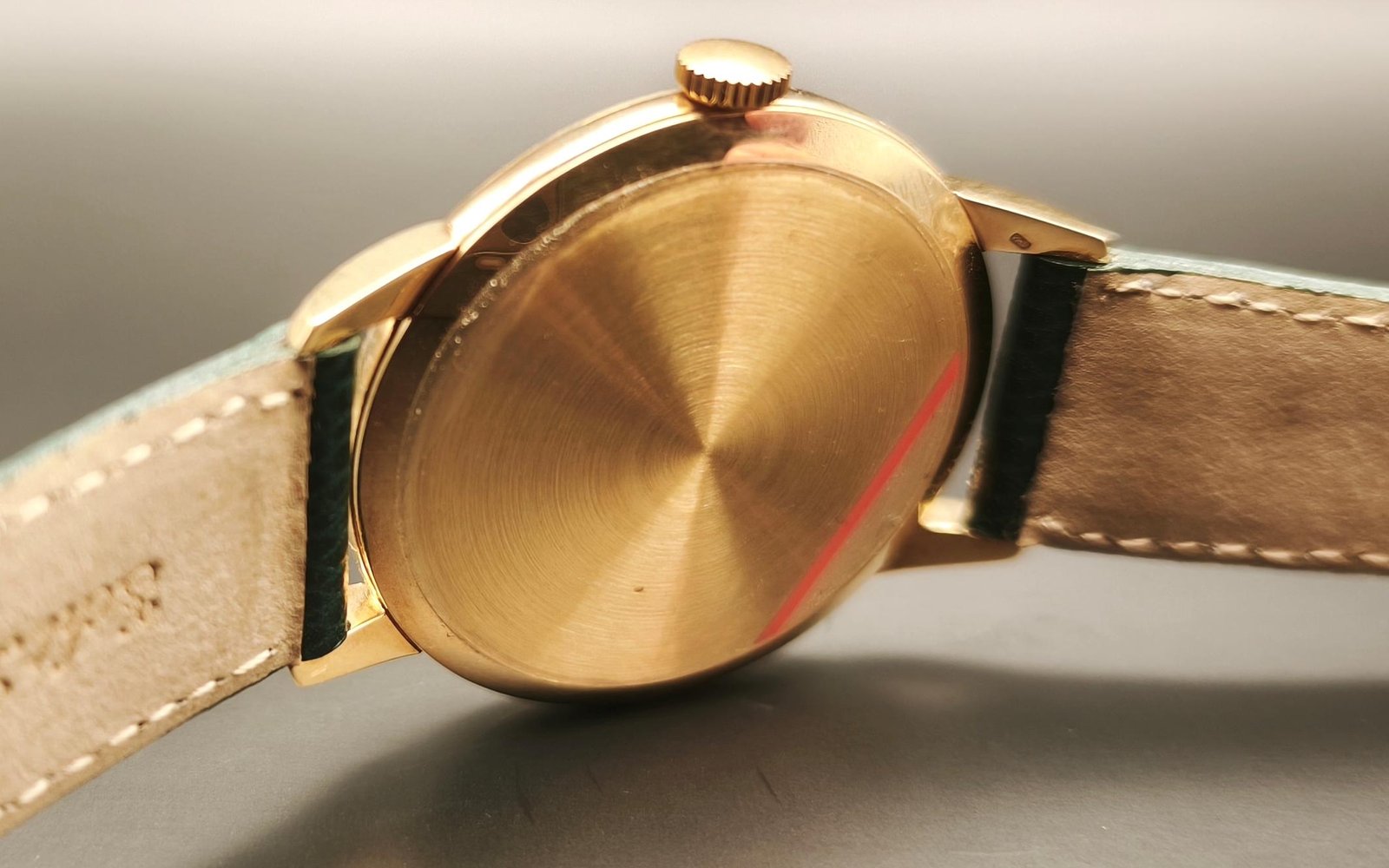
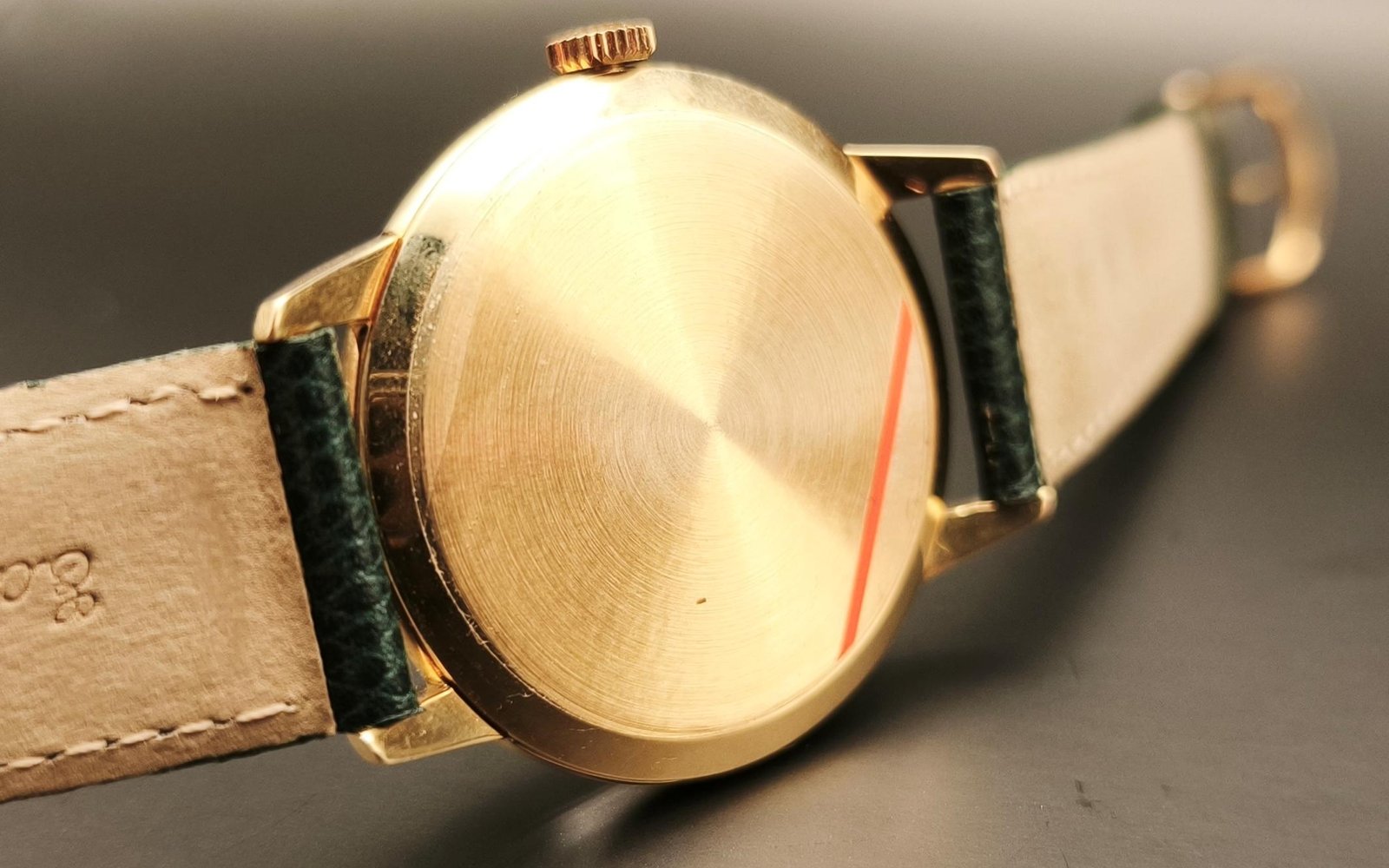
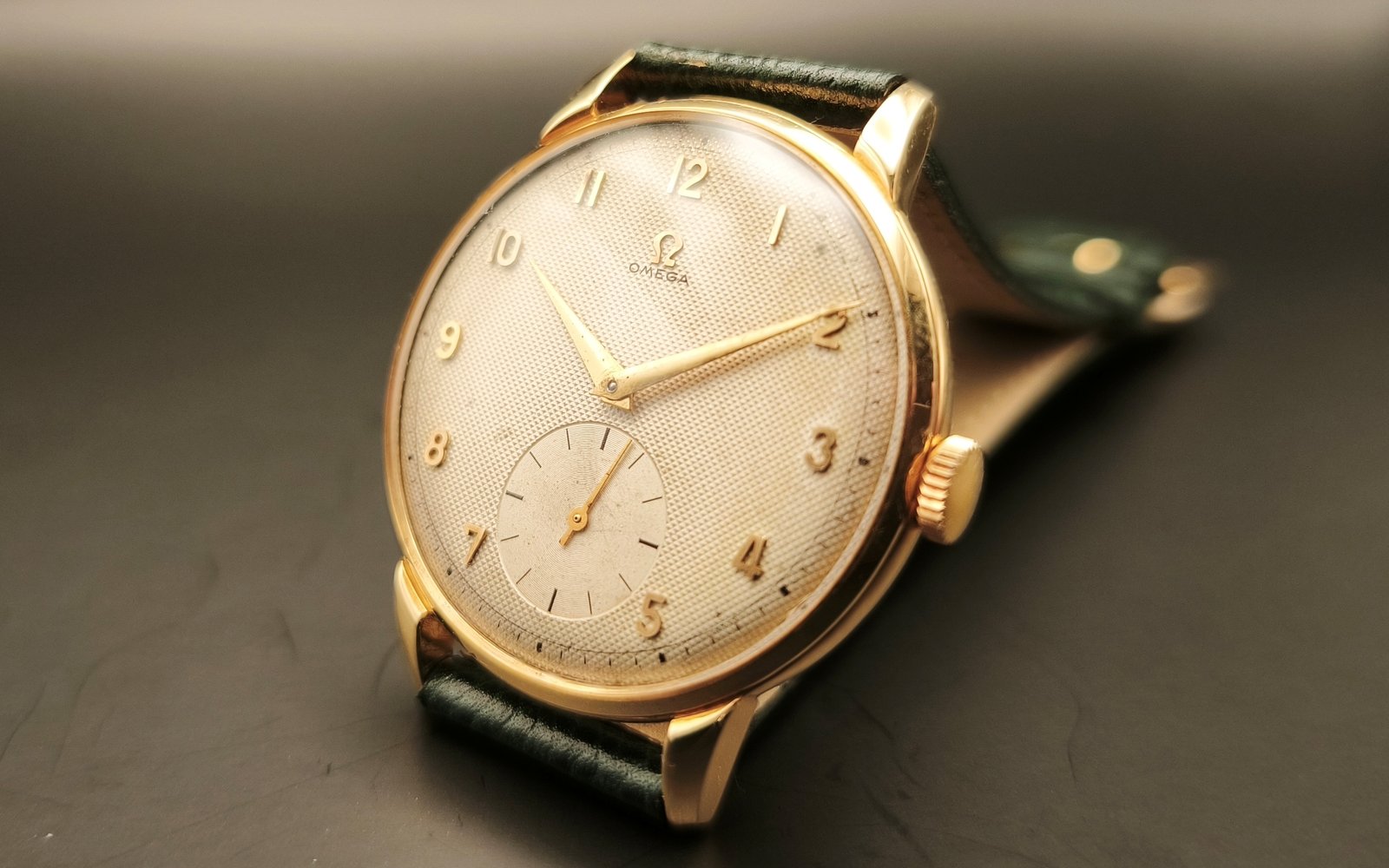
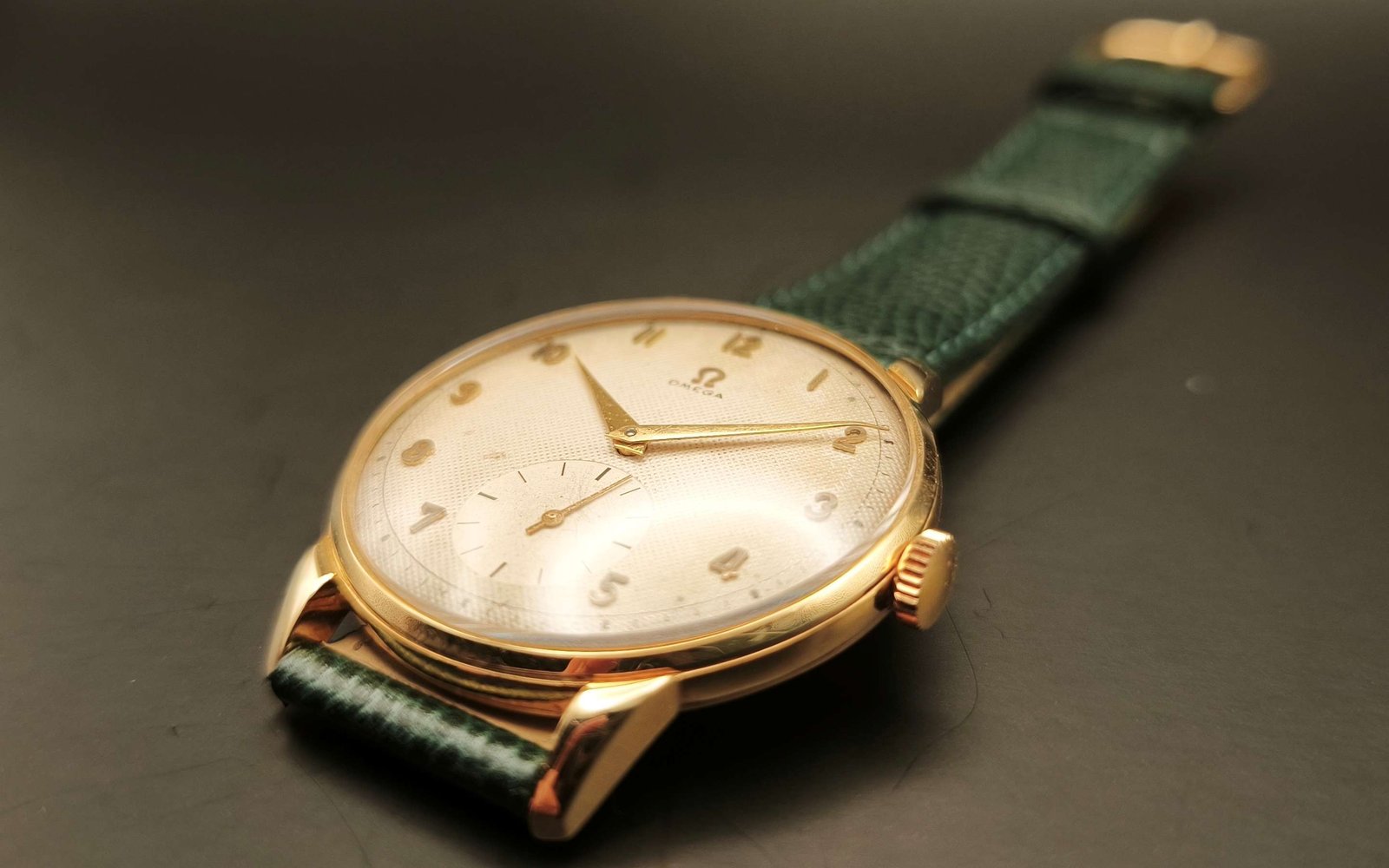
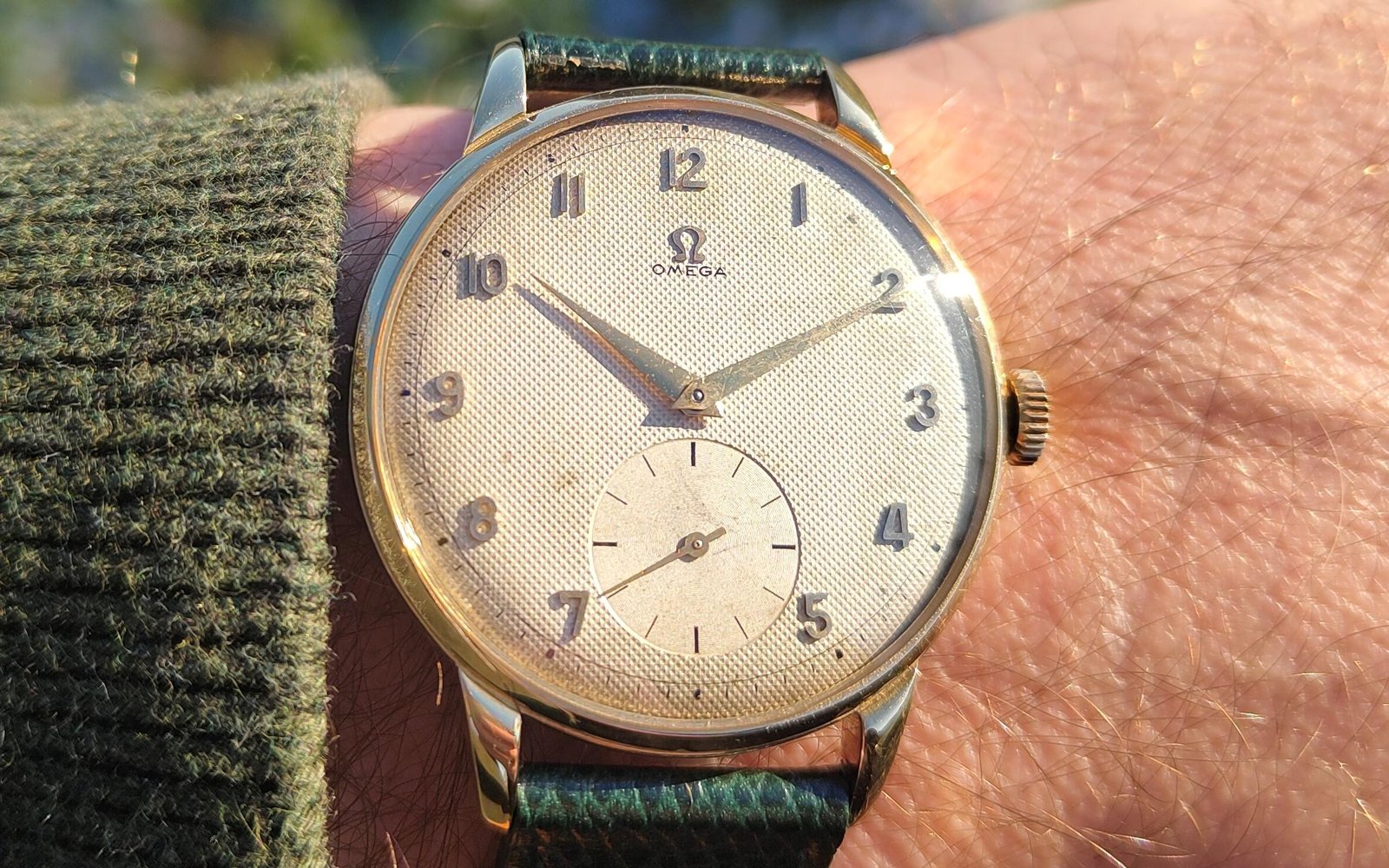
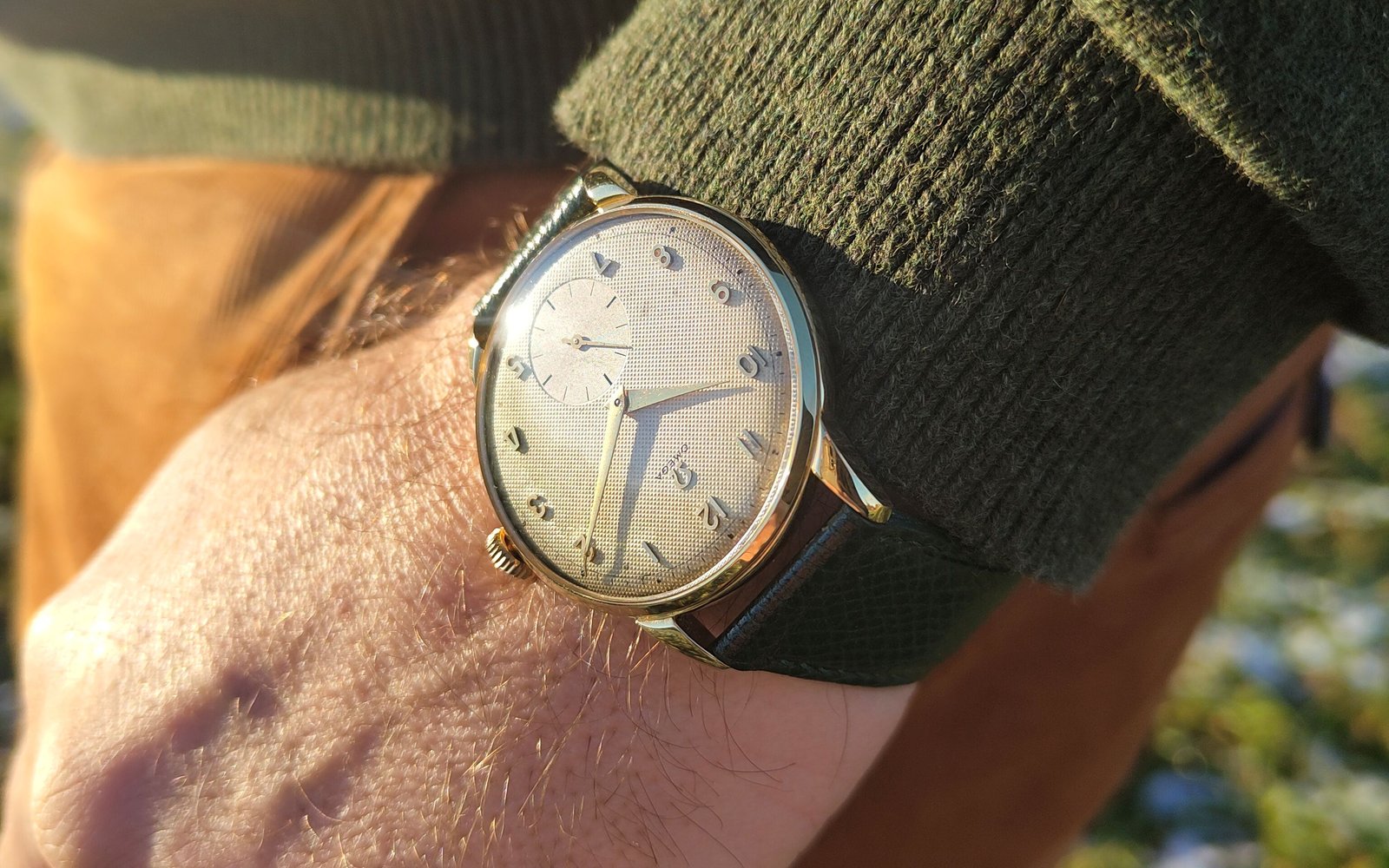
Omega 18K gold, 1950s
In 1952, humanity learned to measure more than time.
The UNIVAC I, the first commercial computer in USA, successfully predicted the outcome of the U.S. presidential election that year, won by Dwight D. Eisenhower — while television quietly reshaped perception, making distant moments feel intimately close. Jet aircraft began to compress continents, redefining distance itself.
In arts and literature, modernist movements flourished. That same year, John Cage premiered a work that would quietly redefine music itself: 4′33″. At its first performance in Woodstock, New York, pianist David Tudor sat at the piano for four minutes and thirty-three seconds without playing a single deliberate note. The piece unfolds in three movements, yet its substance lies not in composed sound, but in everything that happens within that frame of time — the subtle rustle of an audience, a distant cough, the architecture of the room breathing softly around those present.
Cage had once entered an anechoic chamber expecting silence, only to discover that true silence does not exist; he could still hear the hum of his own body. From that insight emerged a radical proposition: music is not merely what is performed, but what is perceived.
As Sir András Schiff, one of the most brilliant Hungarian pianists of our time, examines this essential question in his book „Music Comes Out of Silence“. Music is born out of silence: the breaths, the pauses, the spaces between sounds are not empty, but essential. Without them, music would dissolve into continuous noise, stripped of form and meaning. Silence gives structure, tension, and clarity — it allows each note to emerge, resonate, and return. In this sense, music is not only a sequence of sounds, but an art of time and attention, shaped as much by what is not played as by what is.
More than a watch. A window into history.
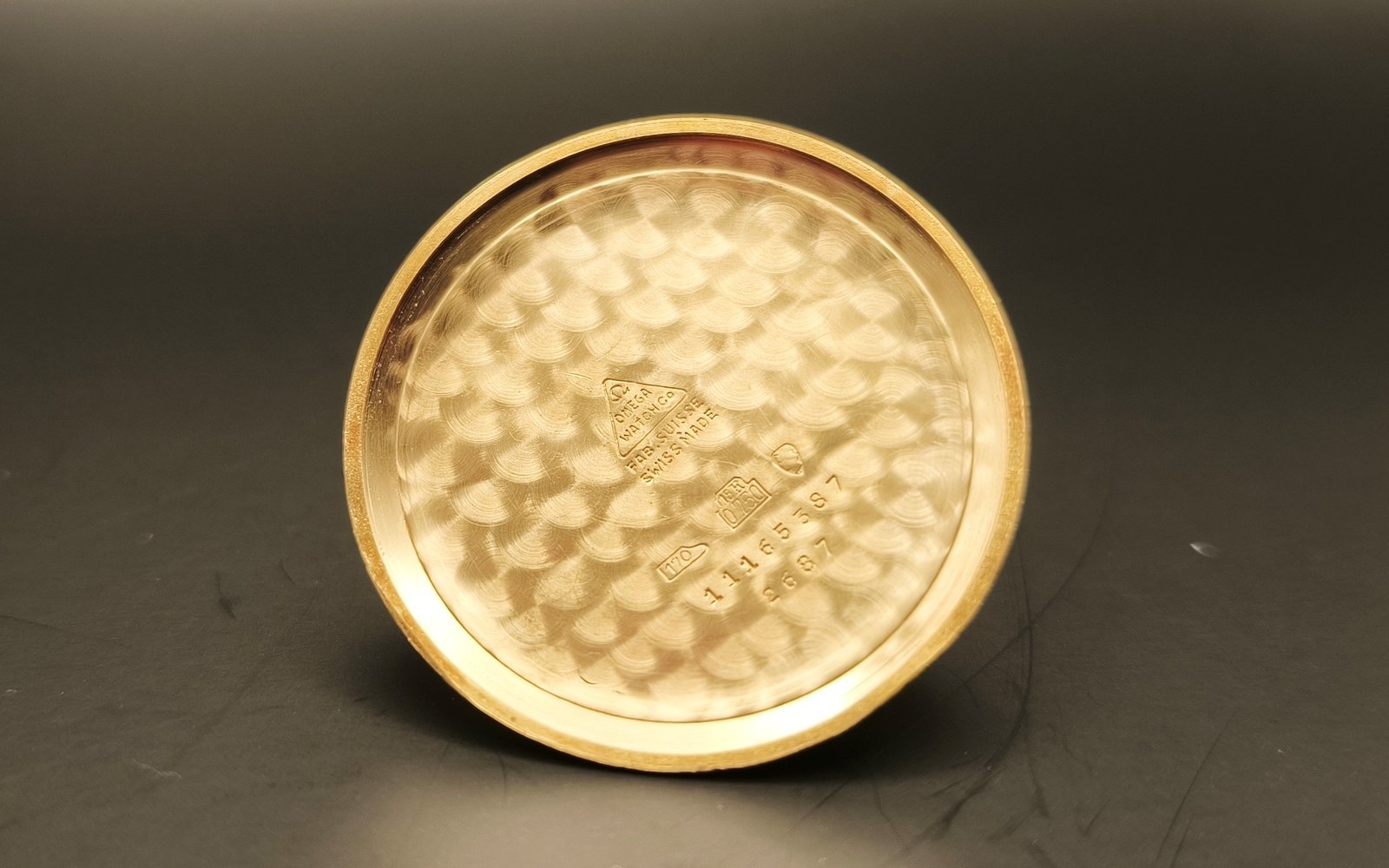
Year of manufacture: 1952
Material: 18-carat gold
Movement: Hand-wound
Caliber: 266 (in-house)
Ref.: 2687
Diameter: 37mm (measured without crown)
Estimated price: 3500€
Baujahr: 1940
Material: Gold
Uhrwerk: Mechanisch
Caliber: 30t2
Durchmesser: 37mm
Omega 18K gold, 1950s
In 1952, humanity learned to measure more than time.
The UNIVAC I, the first commercial computer in USA, successfully predicted the outcome of the U.S. presidential election that year, won by Dwight D. Eisenhower — while television quietly reshaped perception, making distant moments feel intimately close. Jet aircraft began to compress continents, redefining distance itself.
In arts and literature, modernist movements flourished. That same year, John Cage premiered a work that would quietly redefine music itself: 4′33″. At its first performance in Woodstock, New York, pianist David Tudor sat at the piano for four minutes and thirty-three seconds without playing a single deliberate note. The piece unfolds in three movements, yet its substance lies not in composed sound, but in everything that happens within that frame of time — the subtle rustle of an audience, a distant cough, the architecture of the room breathing softly around those present.
Cage had once entered an anechoic chamber expecting silence, only to discover that true silence does not exist; he could still hear the hum of his own body. From that insight emerged a radical proposition: music is not merely what is performed, but what is perceived.
As Sir András Schiff, one of the most brilliant Hungarian pianists of our time, examines this essential question in his book „Music Comes Out of Silence“. Music is born out of silence: the breaths, the pauses, the spaces between sounds are not empty, but essential. Without them, music would dissolve into continuous noise, stripped of form and meaning. Silence gives structure, tension, and clarity — it allows each note to emerge, resonate, and return. In this sense, music is not only a sequence of sounds, but an art of time and attention, shaped as much by what is not played as by what is.
More than a watch. A window into history.
Year of manufacture: 1952
Material: 18-carat gold
Movement: Hand-wound
Caliber: 266 (in-house)
Ref.: 2687
Diameter: 37mm
(measured without crown)
Estimated price: 3500€